A blooming Tecoma (often called “trumpet tree”) by the side of St. George’s Church in George Town, Penang, captured on a bright, cloudless day. Its soft pink flowers briefly blanket the branches each hot season, giving a cherry-blossom feel against the white facade and blue sky.
Queensbay Mall in Penang Bayan Lepas showcases Hari Raya 2026 decorations themed “Gemersik Syawal,” evoking a nostalgic kampung village vibe. Launched around March 6, it features coconut trees, bamboo plants, pelita lamps, glowing crescent moons, and fairy lights. Intricate ketupat ornaments, batik motifs, and nostalgic elements like an antique Volkswagen add to the festive charm. Cultural performances such as Zapin dances and Silat demos occur on weekends, with promotions from brands like The Body Shop.
Gurney Plaza in Penang features stunning Hari Raya decorations for 2026 under the “Sinaran Raya” theme. Highlights include giant pelita lanterns up to 35 feet tall and a nostalgic kampung atmosphere celebrating Malay heritage. The setup creates a festive light garden with radiant displays perfect for photos and family visits. It launched around early March 2026, drawing crowds for its cultural vibes and exclusive Raya promotions.
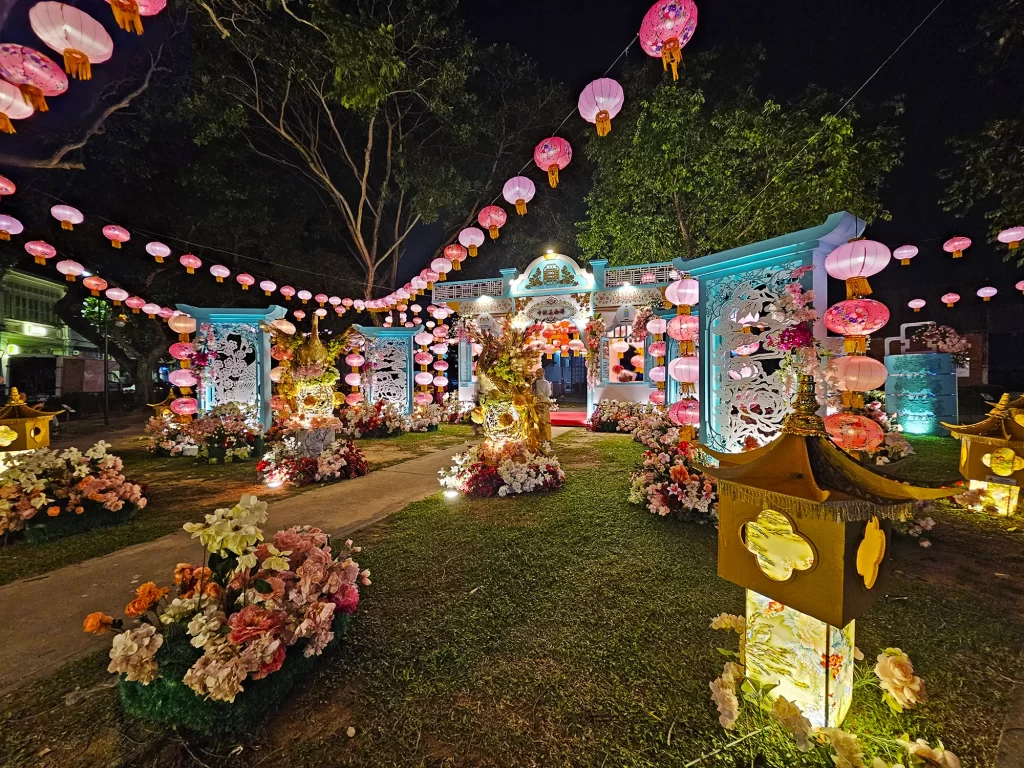
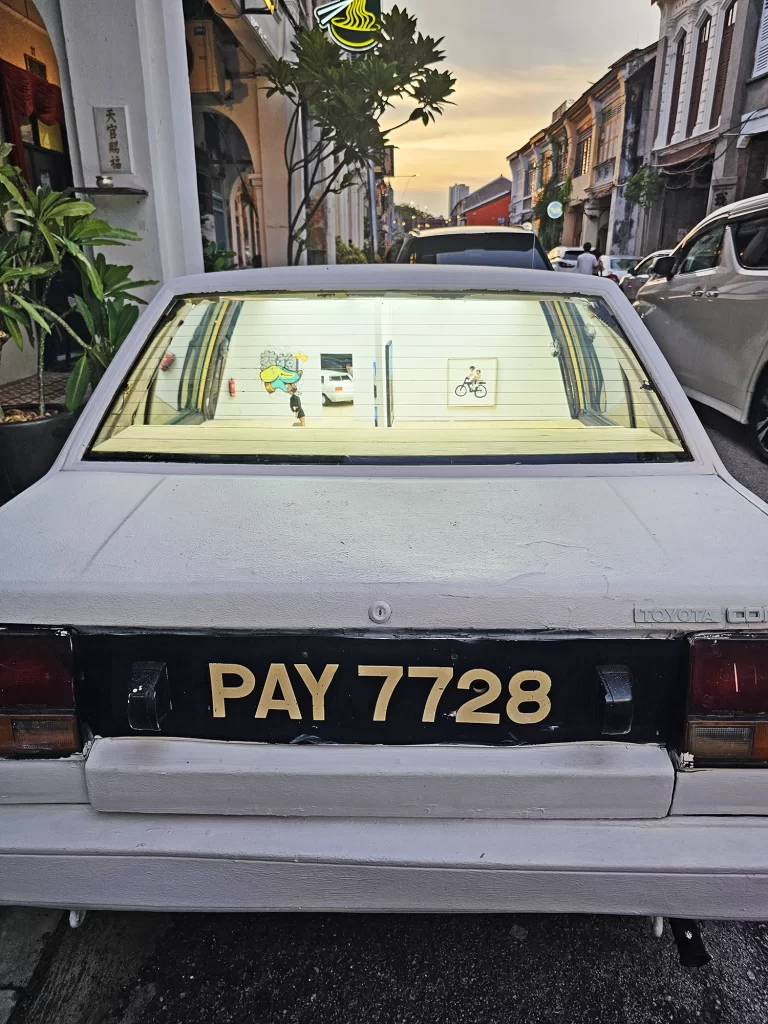
This narrow, mural-lined alley running beside the old Beach Street Fire Station in George Town is decorated with festive Chinese lanterns along with Hari Raya motifs such as golden crescents and stars, and ketupat motifs which give it a very local festive feel. It is also a show of transition between two festive holidays celebrated commonly in Penang.
Thnee Kong Seh (Jade Emperor’s Birthday / Pai Thee Kong) in Penang is observed on the 9th day of Chinese New Year, with main prayers typically done on the night of the 8th day (leading into the 9th). In Penang, a major public-facing celebration spot is Chew Jetty, where a long altar and offerings (notably sugarcane) are traditionally set up for the Jade Emperor.
Thnee Kong Seh (the Jade Emperor’s Birthday celebration) in Penang is especially significant for the Hokkien community and is observed on the 9th day of the Chinese New Year, with preparations and prayers starting on the night of the 8th. A commonly told local-origin story traces the practice to a time of persecution when Hokkien refugees escaped pursuers by hiding in abundant sugarcane plantations; when they safely emerged on the ninth day, they credited the Heavenly God (Jade Emperor) for protection, which is why sugarcane became a “must” offering and the ninth day is remembered as a kind of salvation day.
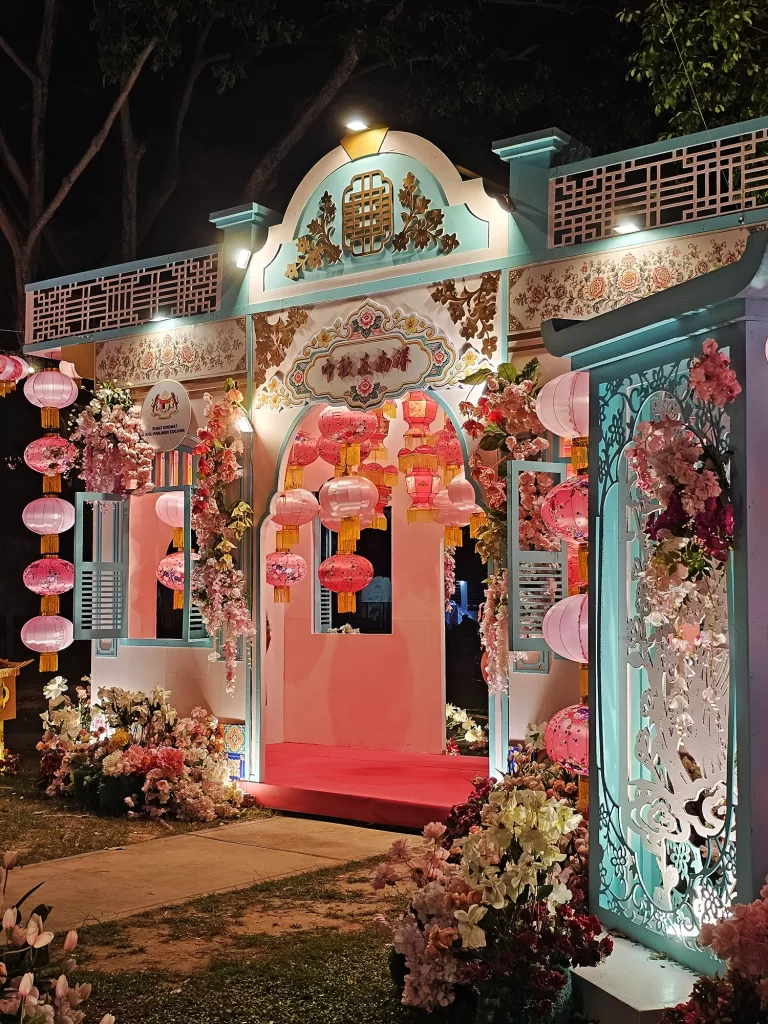
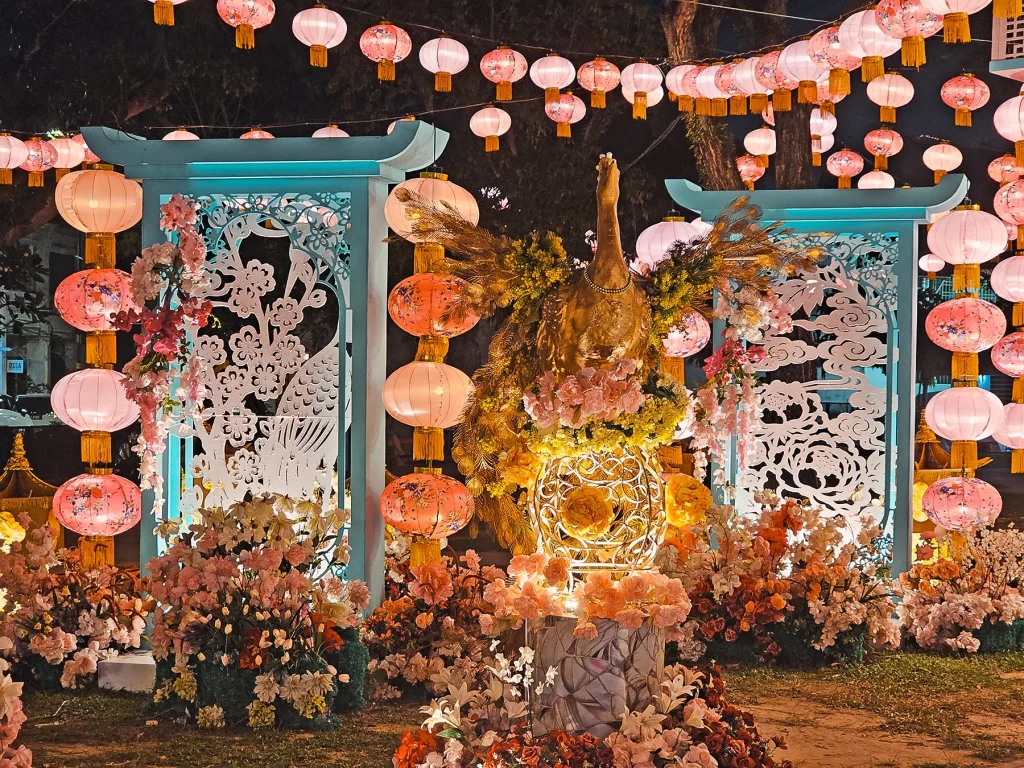
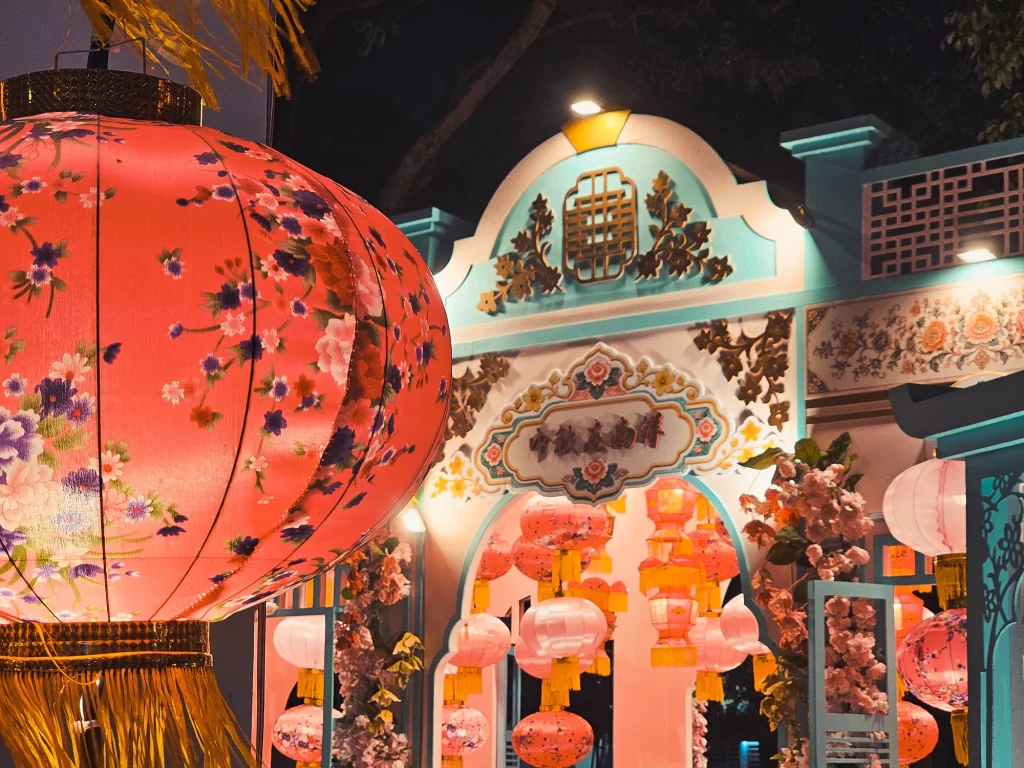
Penang Miaohui (槟城庙会) is Penang’s major Chinese New Year “temple fair” held around George Town’s UNESCO World Heritage streets, where clan halls, guilds, and cultural groups open their doors for public open houses, performances, exhibitions, and hands-on heritage activities. It typically spreads across about 12 heritage streets and features cultural showcases plus large food and interactive booth areas, highlighting Penang’s Chinese heritage in a multicultural, community-focused way.
Lion dance on poles performance for GAMA Departmental Store during Chinese New Year opening.
During Chinese New Year in Penang, lion dances fill public and temple spaces with percussion-driven, acrobatic performances meant to welcome prosperity and chase away negative energy, often culminating in the cai qing blessing for homes and businesses.
In Malaysia, Master Siow Ho Phiew is a Malaysian lion dance coach and lion-head craftsman, widely called the father of Malaysia’s high-pole lion dance for creating a high-pole sequence that became a new standard and for spreading the style internationally through teaching.
Tai Por Kong Temple in Penang commonly refers to San Jiang Temple (三江庙) at Macallum Street Ghaut, a Chinese temple that began as a small shrine founded in 1920 and was later rebuilt after fundraising when the old premises aged. It is associated with the Hui’an Hokkien community, and the name “San Jiang” is said to come from the original Tai Por Kong temple in Hui’an, China, which overlooks three rivers. The temple is also one of the famous temples that conducts the Tai Sui rite, especially during the Chinese New Year. A Tai Sui rite (拜太岁 / 安太岁) is a Taoist-style prayer/appeasement ritual done to seek protection, smoothness, and to “make peace” with the year’s Tai Sui (the annual celestial authority linked to the lunar year), especially if your Chinese Zodiac is believed to be “offending Tai Sui” that year.
A blessing ceremony for the lions which takes place at the old Kuan Yin Temple in George Town during Chinese New Year. Several vibrant southern-style lions in turquoise, pink, and yellow can be seen performing at the temple courtyard as part of the blessing ceremony.
Penang’s southern-style lions trace back to southern Chinese migrant roots, were sustained by local martial arts and community groups, and later evolved in Malaysia into a highly trained, competition-driven performance tradition while remaining central to festive and blessing ceremonies.
Kek Lok Si Temple in Air Itam, Penang, comes alive for Chinese New Year 2026 with a dazzling nightly light-up that turns the hillside complex into a glowing “sea of lanterns,” perfect for an evening visit and festive photos. The CNY light-up season runs from 13 February to 16 March 2026, with the official light-up ceremony on 13 February (7:00pm–8:00pm) featuring prayers and fireworks, and the lights typically shining nightly from 7:00pm to 12:00am throughout the period—making it one of Penang’s most iconic Lunar New Year traditions and a must-see stop if you’re on the island this season.