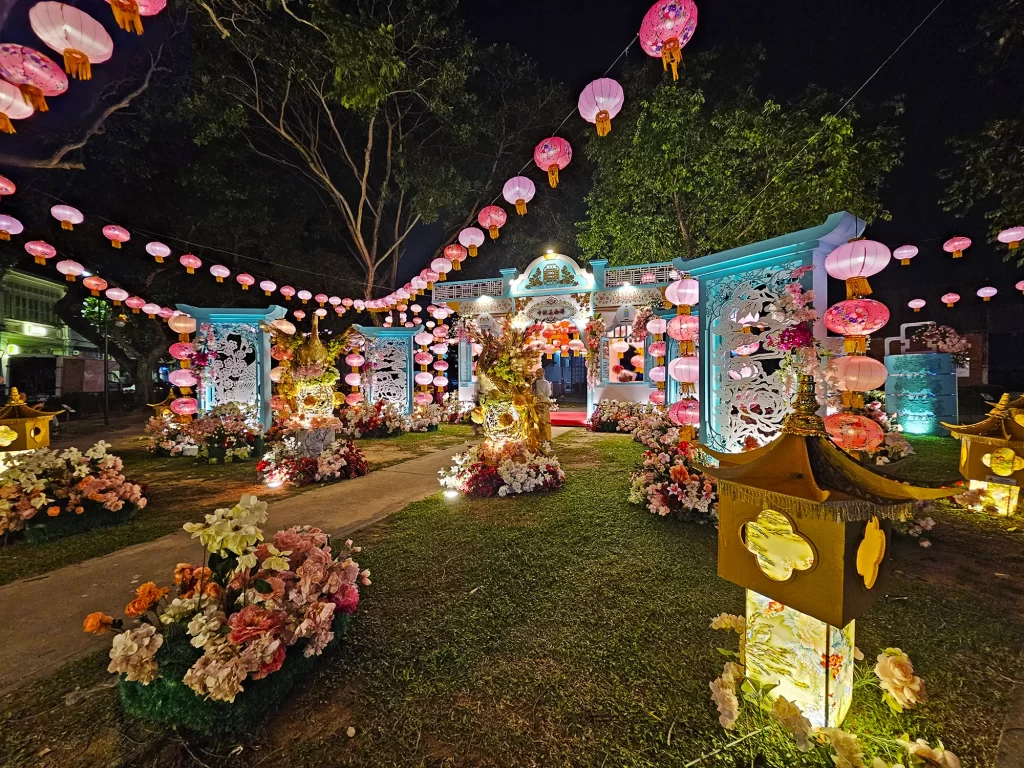
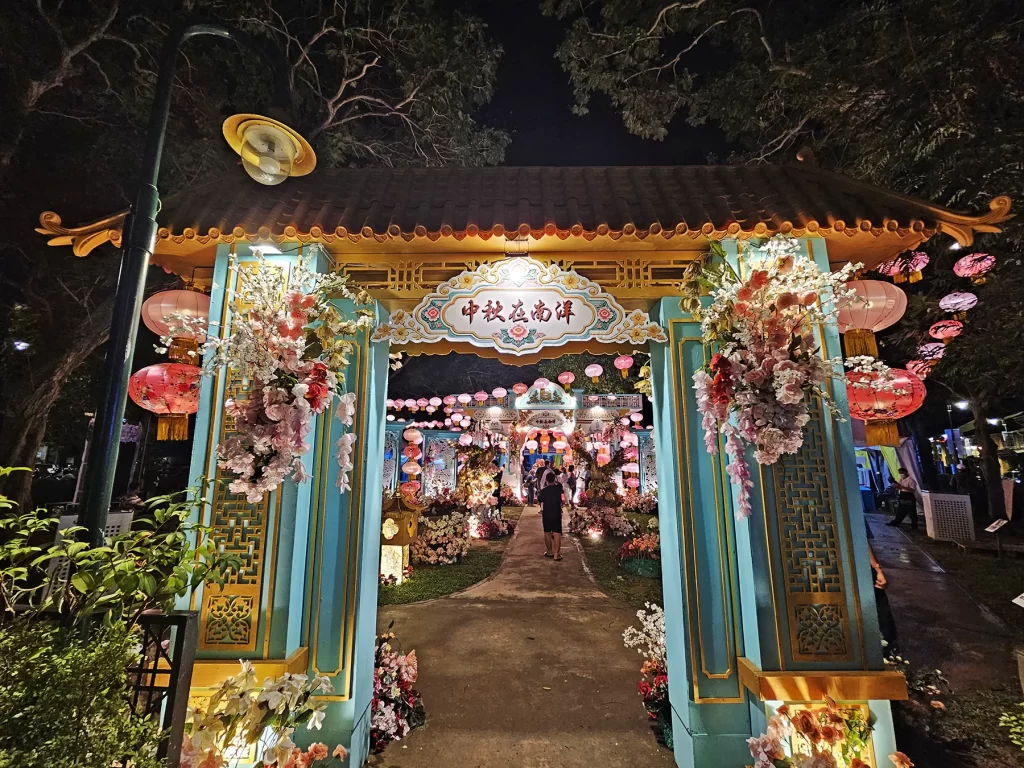
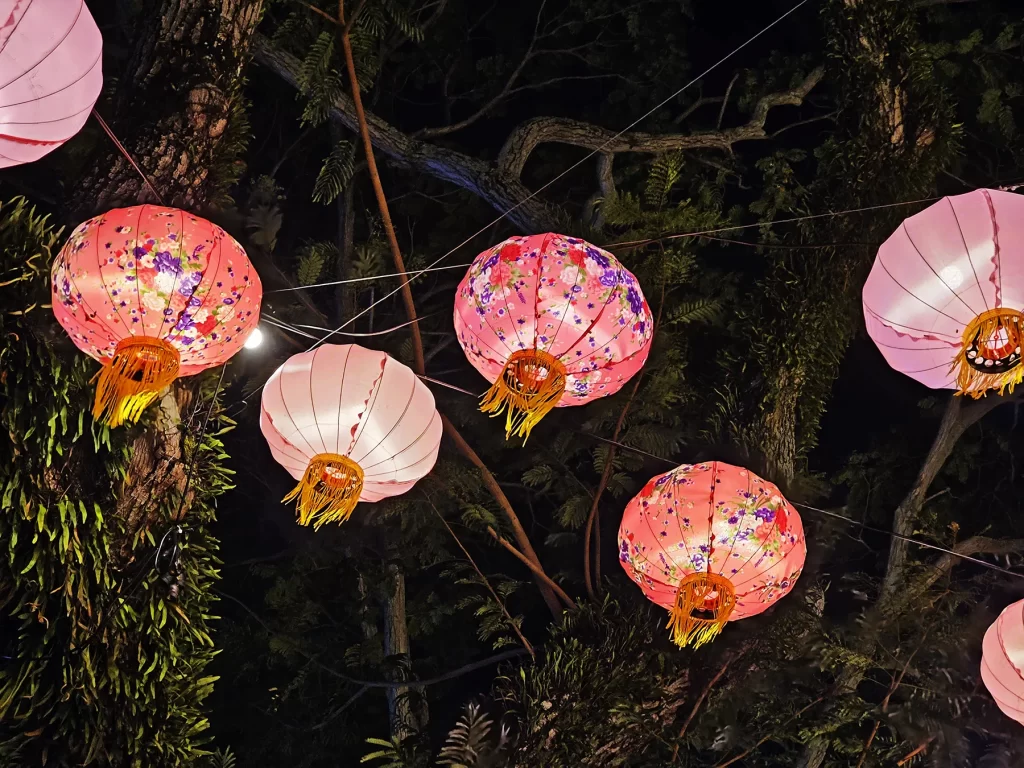
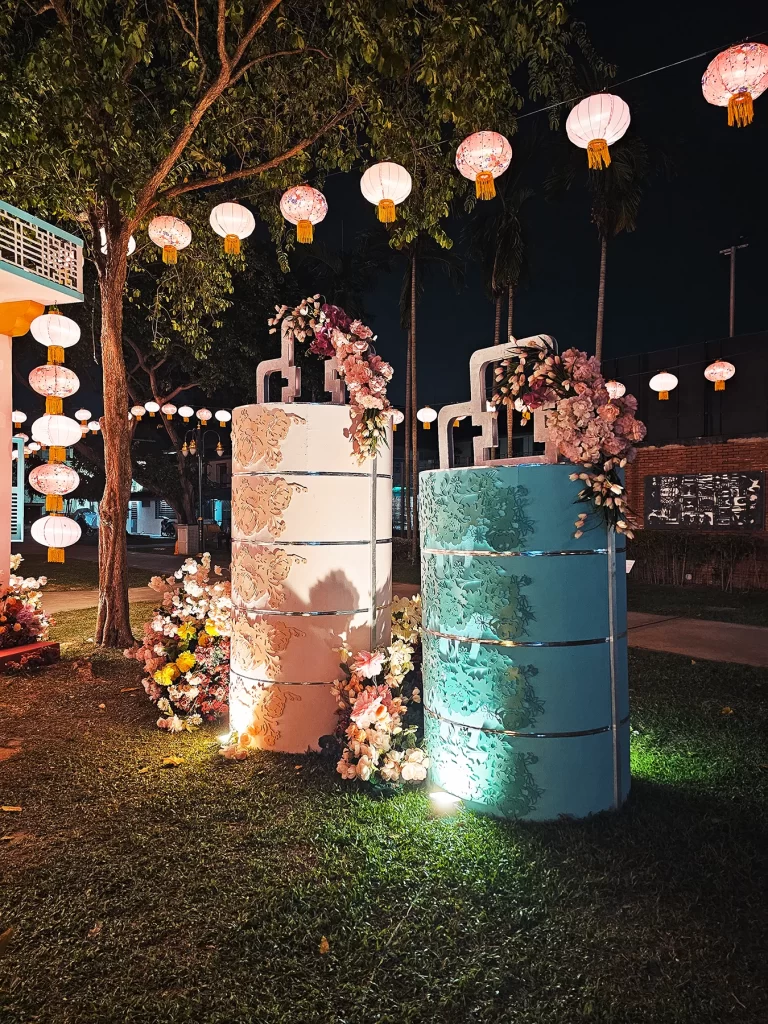
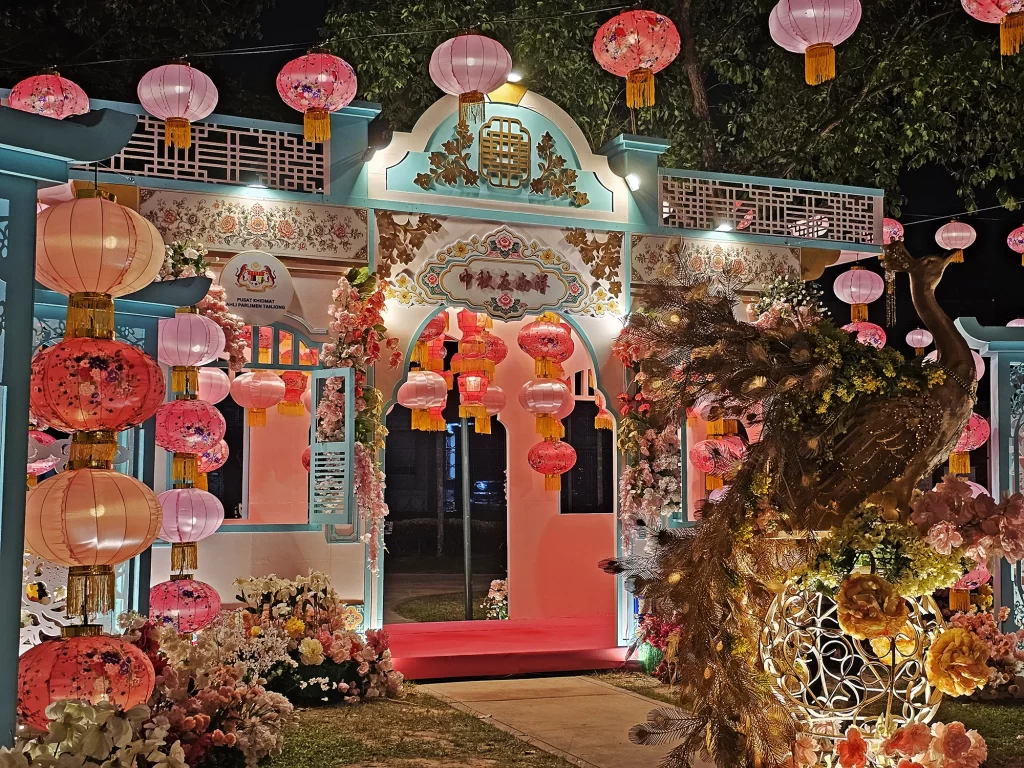
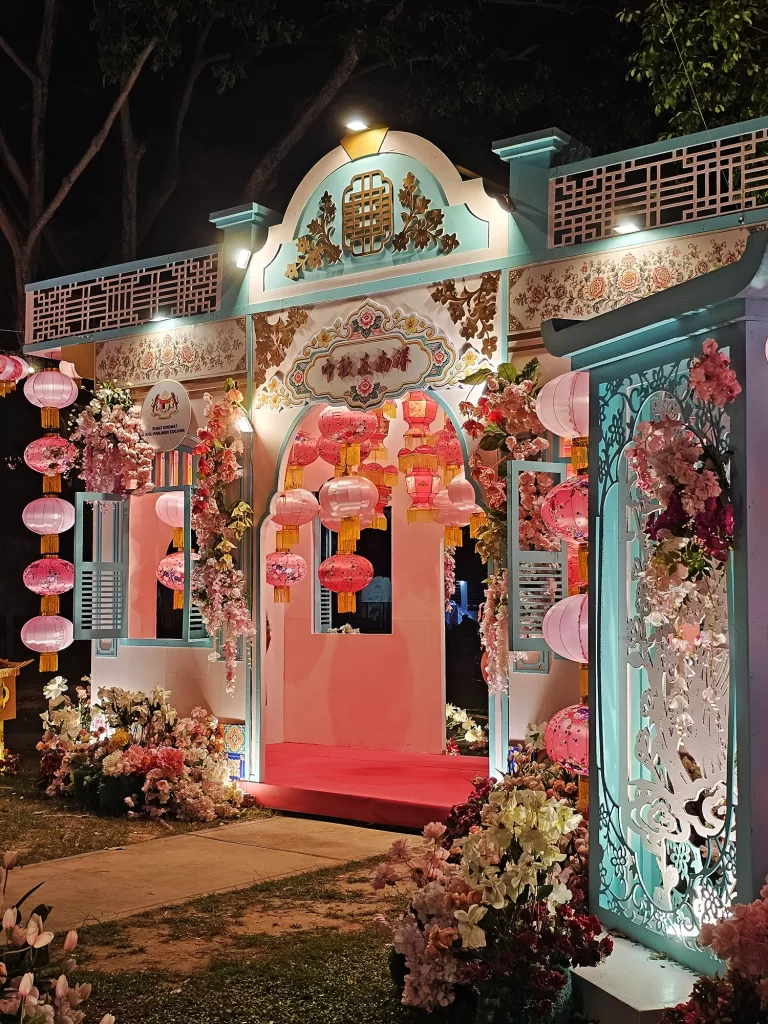
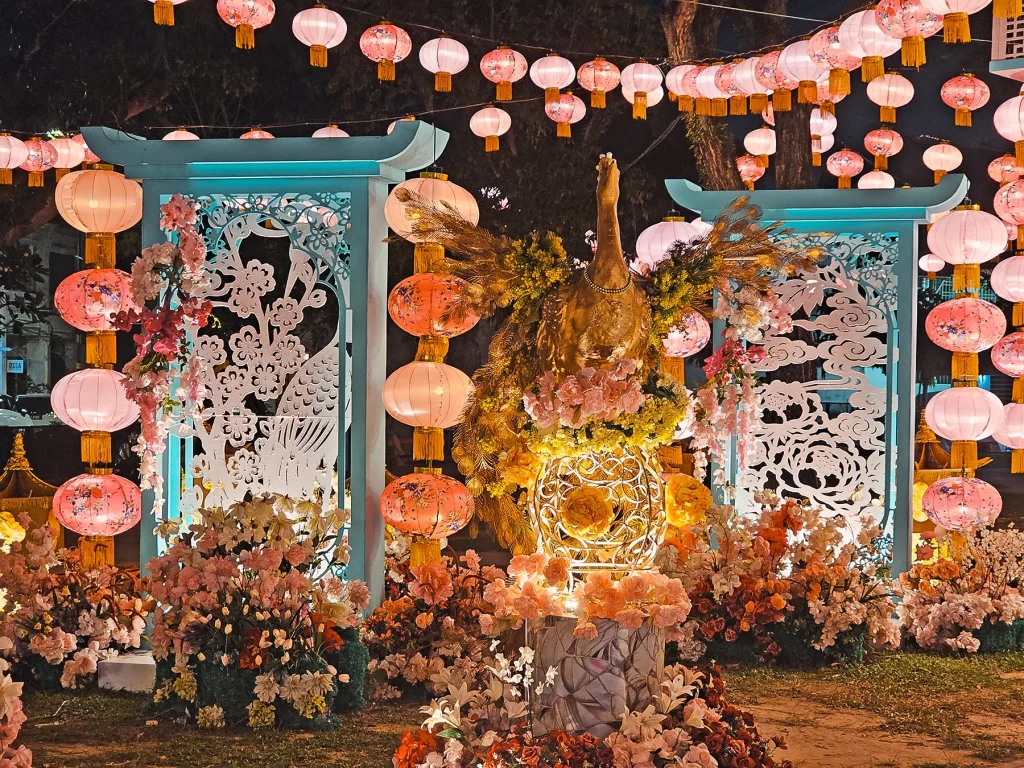
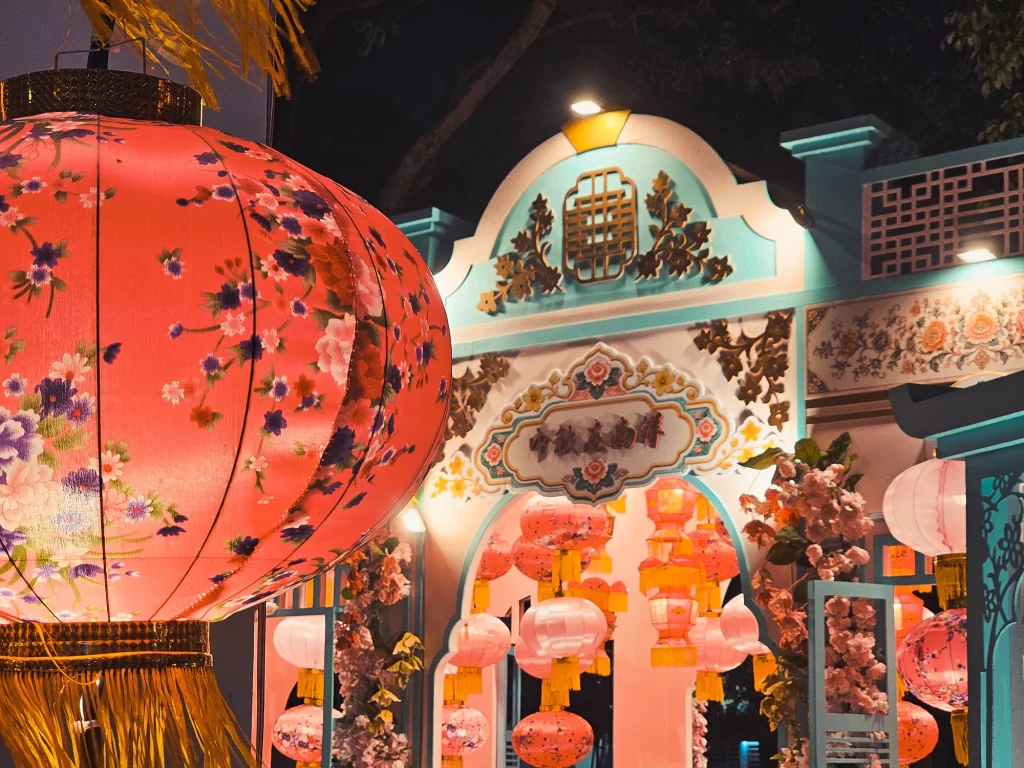
A Festive Alley Beside Beach Street Fire Station

This narrow, mural-lined alley running beside the old Beach Street Fire Station in George Town is decorated with festive Chinese lanterns along with Hari Raya motifs such as golden crescents and stars, and ketupat motifs which give it a very local festive feel. It is also a show of transition between two festive holidays celebrated commonly in Penang.

Scenes from Kek Lok Si Temple (Kuan Yin Statue)

The Kuan Yin statue at Kek Lok Si is a towering bronze figure of the Buddhist Goddess of Mercy, standing about 30 meters tall on the hilltop above the main temple complex and sheltered by a grand three-tiered pavilion supported by 16 columns. Her serene pose and flowing robes look out over Penang, making her one of the most visually dominant landmarks of the entire temple.

One interesting fact is that this is actually the second Kuan Yin statue on the site: the original white plaster statue, completed in the 1970s–80s, was badly damaged by a fire in the 1990s and later replaced by the current, taller bronze version completed in 2002. Kuan Yin, known as Guanyin, is the Buddhist bodhisattva (often depicted as female) embodying infinite compassion and mercy, observing the world’s suffering to offer relief.

Scenes from Kek Lok Si Temple

For Chinese New Year 2026, Kek Lok Si Temple in Air Itam becomes Penang’s crowning light display, with more than 10,000 lanterns and LED decorations turning the temple into a “sea of light” from 13 February to 16 March, highlighted by a 7:00 pm lighting ceremony on 13 February that includes prayers and fireworks, plus nightly openings until midnight so visitors can soak in the festive atmosphere and religious activities throughout the lunar‑new‑year period.

Bukit Mertajam Temple CNY Decorations

Pek Kong Cheng (Bukit Mertajam) has a notable Chinese New Year decoration setup this year featuring lots of red lanterns plus a special “Leaping Fish” theme using fish-shaped lanterns. The installation consists of more than 300 fish-shaped lanterns in the area around Pek Kong Cheng Temple (also known as Hock Teik Cheng Sin) at Jalan Pasar.

Raja Uda (Butterworth) CNY Lanterns Street

Raja Uda (Butterworth) is Penang’s well-known CNY “lantern street,” with thousands of red lanterns spanning roughly a few kilometers and best enjoyed after nightfall. At night, the lanterns form a continuous red canopy that’s become a major “check-in” / photo spot in the area. It’s also a long-running local tradition that has been done annually (with pauses during the pandemic period). The lit-up stretch runs from the south junction of Jalan Telaga Air through Jalan Raja Uda.

Chinese New Year 2026 Southern Lion Dance Blessing Ceremony at Kuan Yin Temple (Kuan Yin Teng)

A blessing ceremony for the lions which takes place at the old Kuan Yin Temple in George Town during Chinese New Year. Several vibrant southern-style lions in turquoise, pink, and yellow can be seen performing at the temple courtyard as part of the blessing ceremony.

Penang’s southern-style lions trace back to southern Chinese migrant roots, were sustained by local martial arts and community groups, and later evolved in Malaysia into a highly trained, competition-driven performance tradition while remaining central to festive and blessing ceremonies.

Kek Lok Si’s Sea of Lanterns: Penang’s CNY 2026 Night Lights (13 Feb–16 Mar)

Kek Lok Si Temple in Air Itam, Penang, comes alive for Chinese New Year 2026 with a dazzling nightly light-up that turns the hillside complex into a glowing “sea of lanterns,” perfect for an evening visit and festive photos. The CNY light-up season runs from 13 February to 16 March 2026, with the official light-up ceremony on 13 February (7:00pm–8:00pm) featuring prayers and fireworks, and the lights typically shining nightly from 7:00pm to 12:00am throughout the period—making it one of Penang’s most iconic Lunar New Year traditions and a must-see stop if you’re on the island this season.

Armenian Street Lanterns

Armenian Street comes alive at night in this cozy, lantern-lit scene, where rows of glowing red Chinese lanterns float above the narrow lane and warm streetlights bounce off the old shophouse walls. The bright yellow road markings lead your eye into the distance, while little details (plants by the gates, hanging wires overhead, and small storefront corners) give the street its lived-in Penang character.

Armenian Street Park: 2026 Chinese New Year Decorations

Armenian Street Park in George Town was lit up for Chinese New Year 2026 as part of the build-up to the Penang Miaohui celebrations, with the area illuminated during an official lighting-up ceremony. The park’s central decoration highlight is “Xiao Jun,” a cheerful horse installation unveiled at Armenian Park, set as a photo spot for visitors. Surrounding it are six golden “trees” with shimmering leaves and a set of large drums bearing auspicious greetings, adding to the festive display and performance backdrop. These decorations help set the stage for Miaohui 2026 (themed around a “decoding” cultural journey), which organisers describe as a major annual Chinese New Year cultural programme in the Armenian Street heritage enclave with free public admission.

Armenian Street View at Night

Despite its name, Armenian Street (Lebuh Armenian) was not originally settled by Armenians. It was named after the small Armenian community that once lived there in the early 1800s, who were influential traders and philanthropists in Penang. Interestingly, the famous Eastern & Oriental Hotel was founded by the Armenian Sarkies Brothers, who also established Singapore’s Raffles Hotel.

Today, the street is a UNESCO heritage hotspot known for its murals, cafes, and historic shophouses.