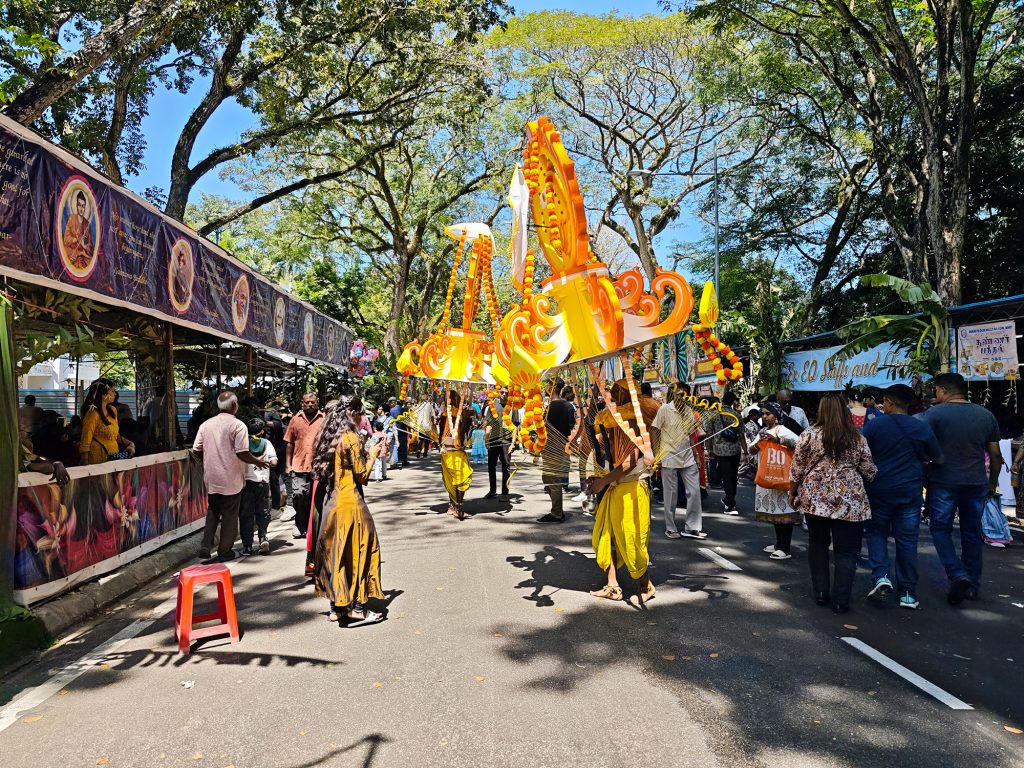

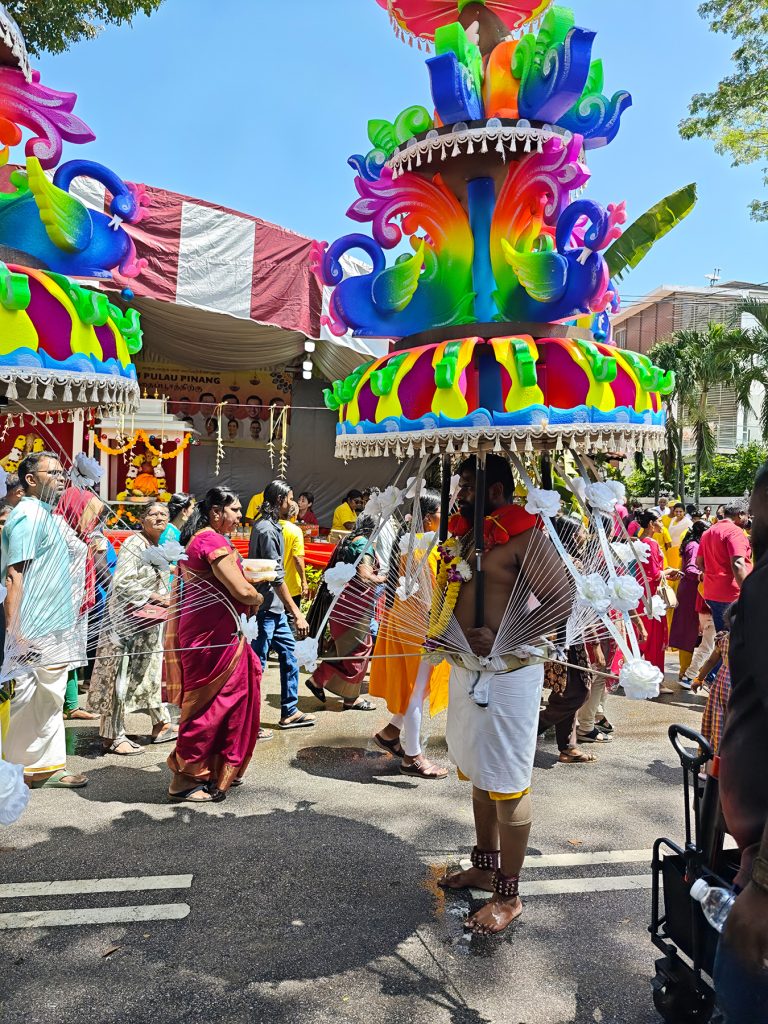
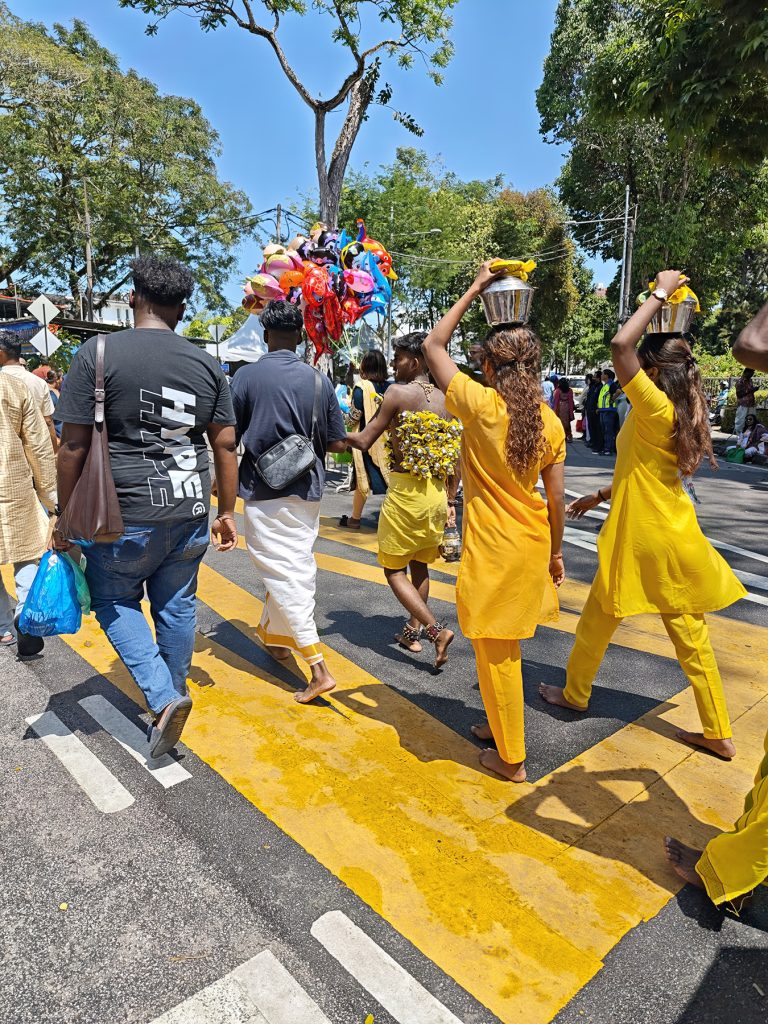
Scenes from Penang’s Thaipusam Festival. The Thaipusam festival in Penang fills the streets with devotion as kavadi bearers and pilgrims journey to temples in a powerful display of faith.
Scenes from Penang’s Thaipusam Festival. The Thaipusam festival in Penang fills the streets with devotion as kavadi bearers and pilgrims journey to temples in a powerful display of faith.
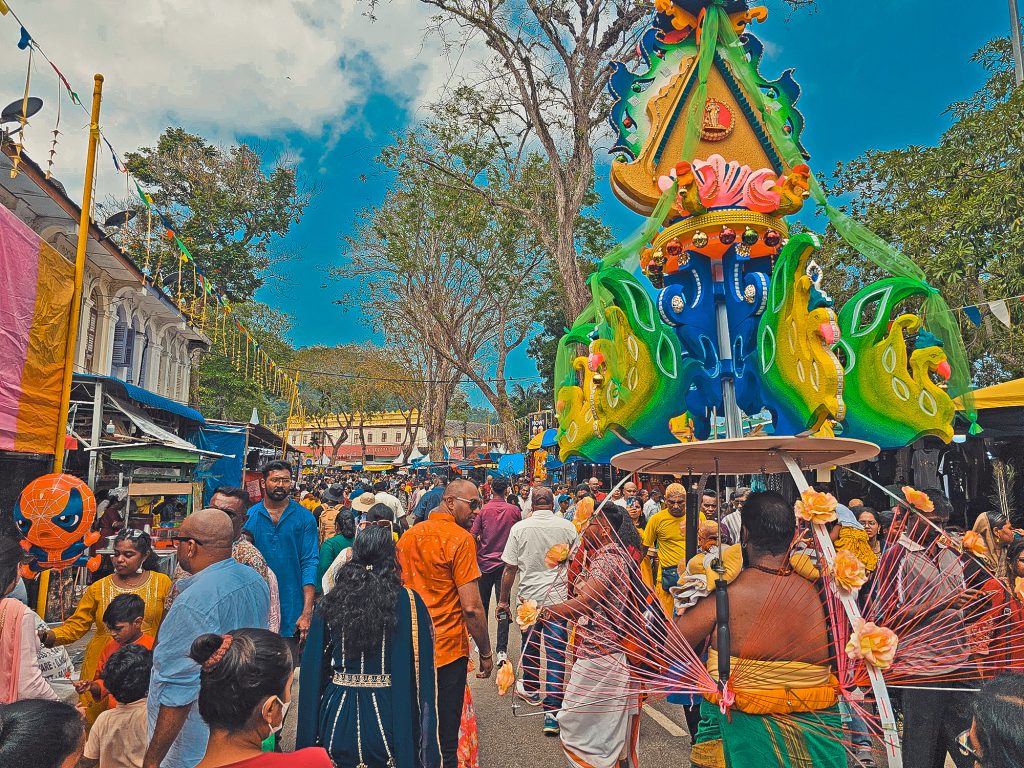
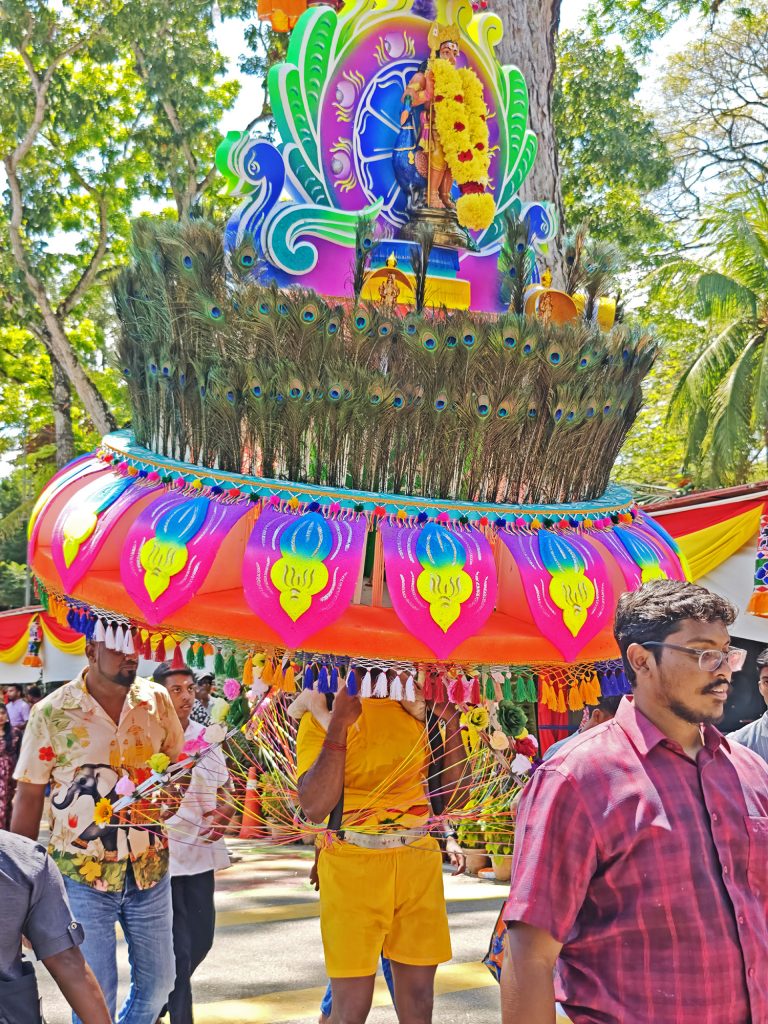
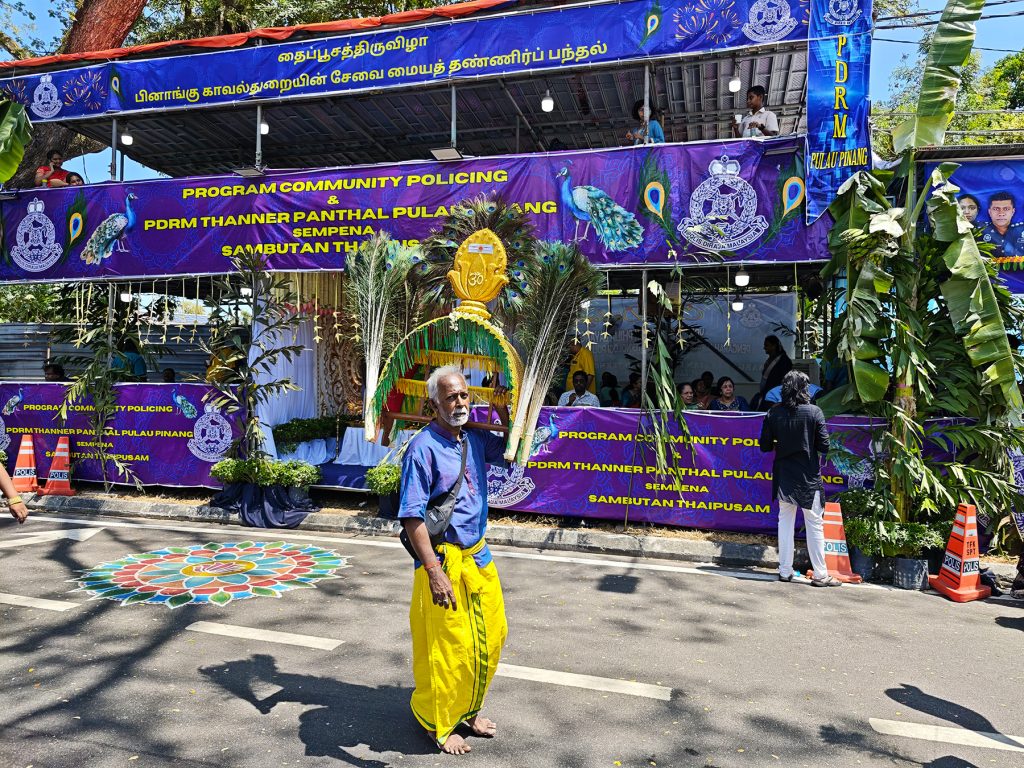
Thaipusam is a Tamil Hindu festival dedicated to Lord Murugan, marked by devotion and penance, and in Penang it’s strongly associated with chariot processions and devotees carrying kavadis (including ornate peacock kavadis). Penang’s celebrations are commonly centred around the Arulmigu Balathandayuthapani Temple (Waterfall Hilltop Temple) area, with large crowds and many “Thaneer Panthals” (refreshment stalls) along routes.
Penang celebrates Thaipusam on 1 Feb 2026, with major processions and rituals spilling into the eve (31 Jan), making it one of the island’s biggest, most visible Hindu religious events focused on Murugan devotion and iconic chariot/kavadi traditions.
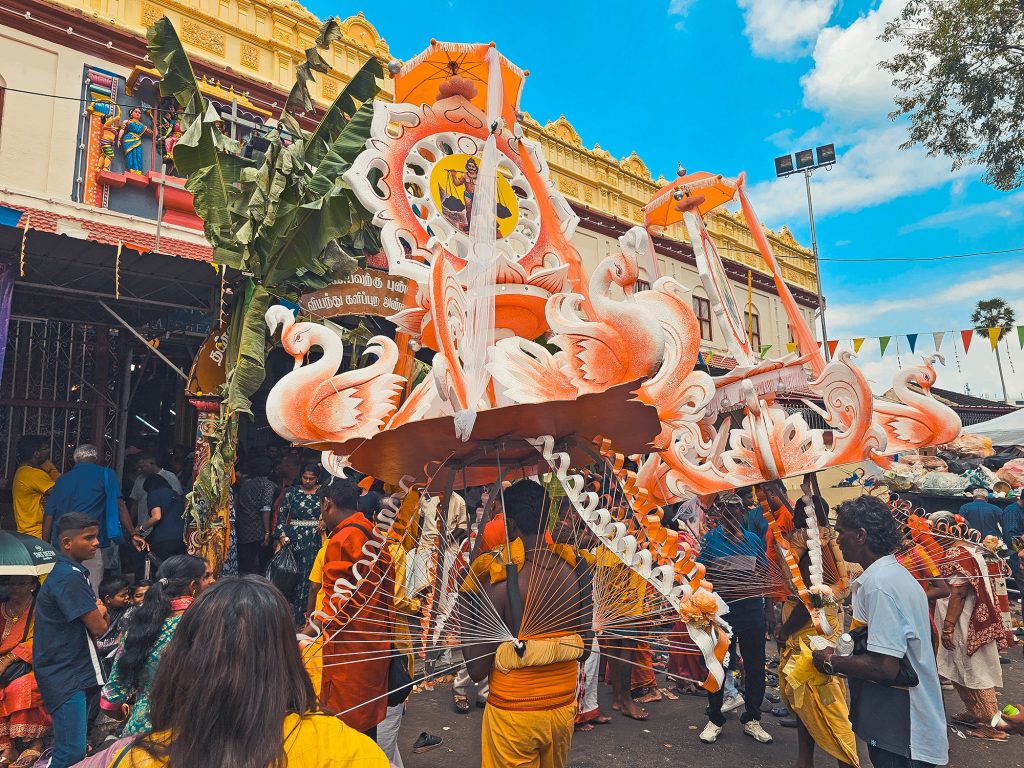


Thaipusam scenes at the compound nearby Sri Muthu Mariamman Temple in George Town, Penang.
Thaipusam in Penang paints a vivid tapestry of religious devotion and cultural spectacle. Celebrated annually in late January or early February, this Hindu festival honors Lord Murugan with a mesmerizing procession from Georgetown to the sacred Arulmigu Balathandayuthapani Temple atop the Waterfalls hill area.
The highlight is the iconic Silver Chariot, adorned with devotees carrying ornate kavadis, creating a symphony of traditional music and rhythmic drumbeats. The atmosphere is electric as devotees showcase their unwavering faith through acts of penance, including body piercings and elaborate decorations (also known as Kavadi bearer). Thaipusam in Penang is not only a religious event but a testament to the island’s cultural richness and the harmonious coexistence of diverse communities, offering a must-see experience for locals and tourists alike.
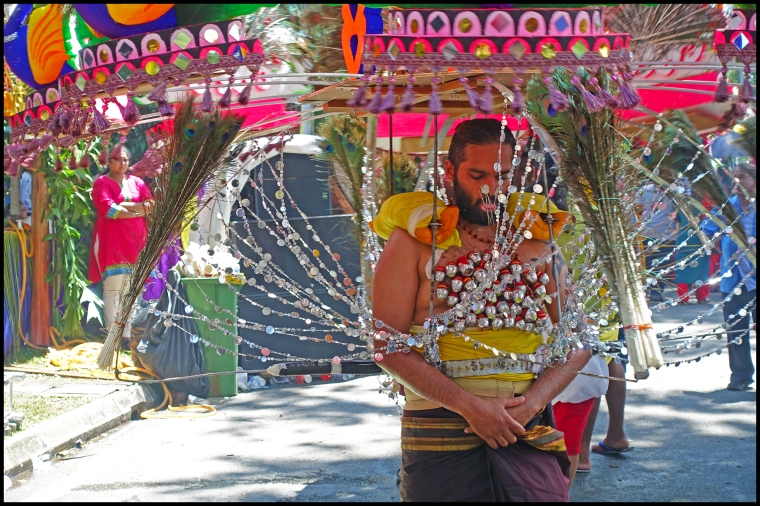
A Kavadi carrier making his pilgrimage to the hilltop temple during the Thaipusam festival in Penang.
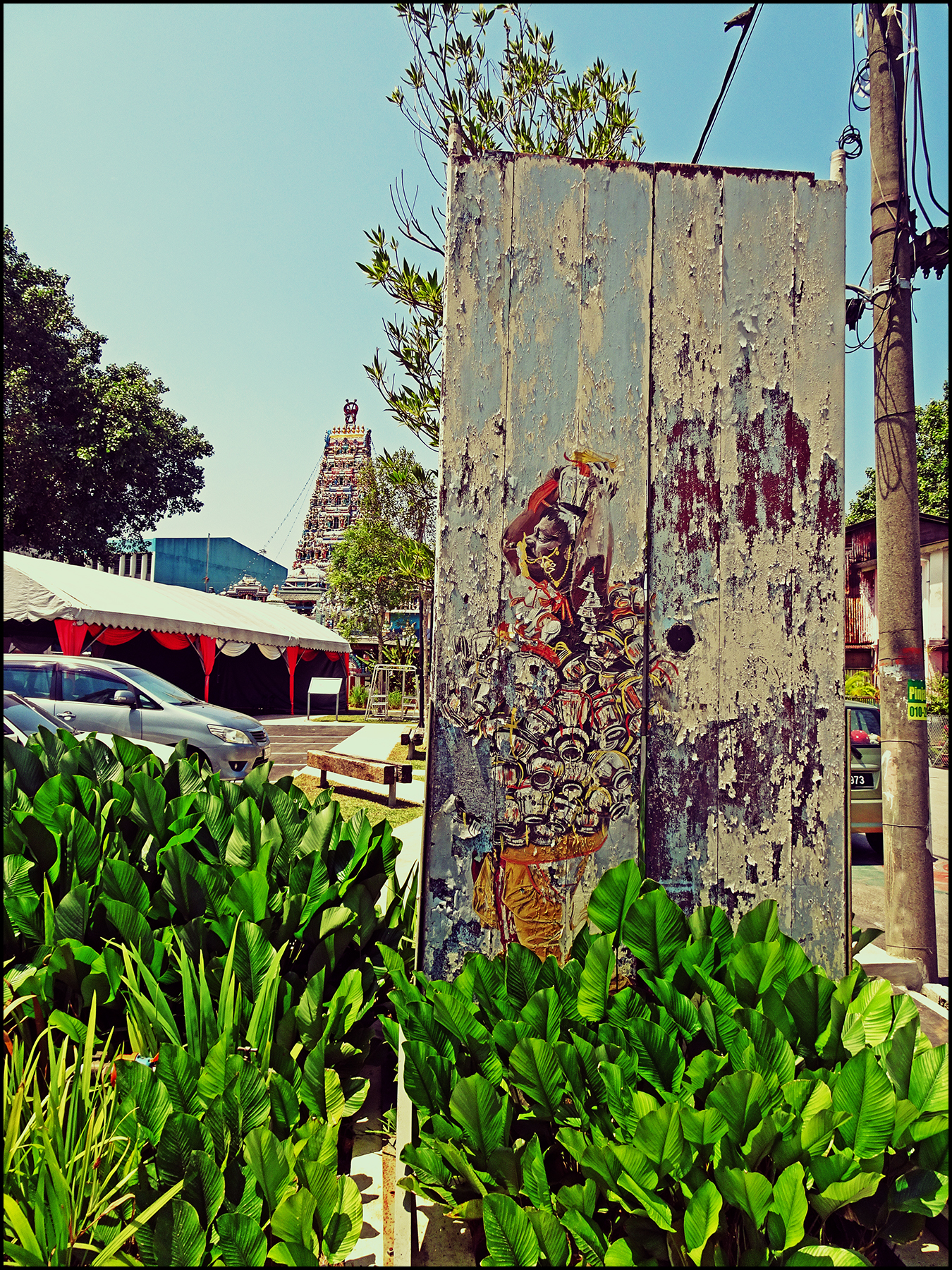
An old art work featuring a Kavadi bearer located nearby the Indian temple, Sree Maha Mariamman Temple, in Butterworth.

A Kavadi carrier walking through the crowded road to the temple during the Thaipusam festival in Penang.
Scenes from the Thaipusam festival celebration in Penang.
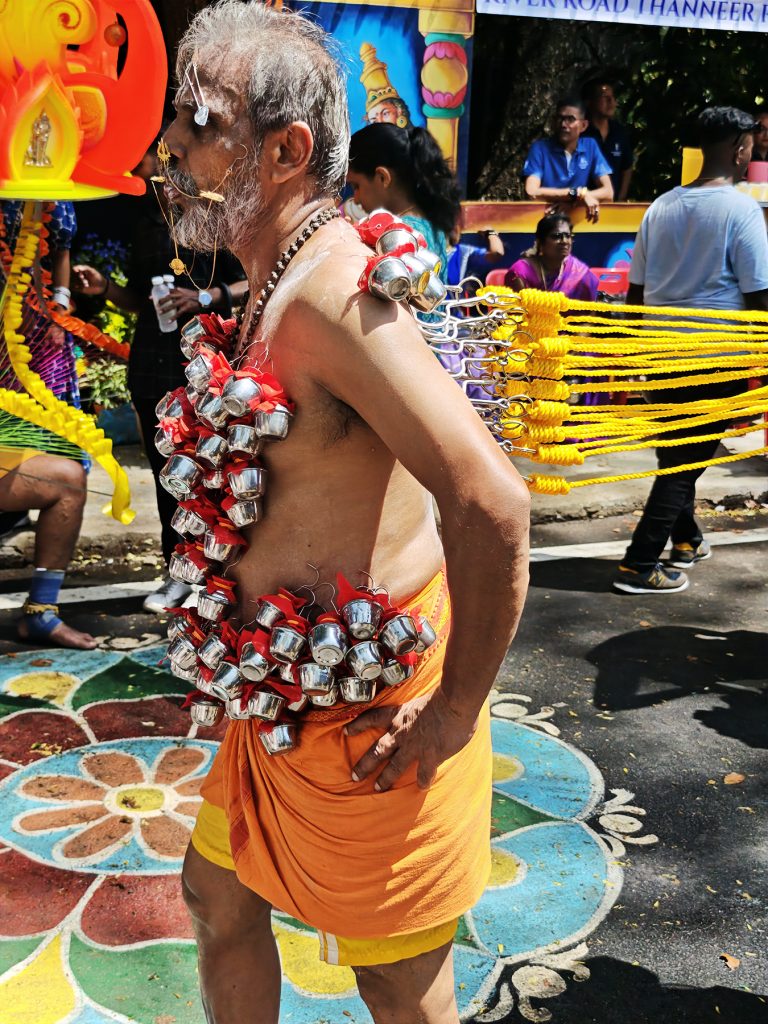
A Hindu festival mostly celebrated by the Tamil community every year, the Thaipusam festival for this year falls on the 31st January. The most notable or intriguing scene from this festival is the kavadi-bearers, devotees who usually had their bodies pierced while undergoing a pilgrimage as part of their offerings for their gods during the festival.

In conjunction with the Thaipusam Festival, today is a public holiday in Penang. Thaipusam is a Hindu festival celebrated mostly by the Tamil community annually.

Today marks the day of the Thaipusam festival, celebrated by Hindu devotees in the country.
Thaipusam is a Hindu festival celebrated mostly by the Tamil community annually. Outside India, Malaysia is the only country which widely observes this festival. In Malaysia, it was popularly celebrated by many Hindu devotees either at the Batu Caves in Selangor or the Waterfall Temple in Penang. Carrying the ‘kavadi’ or pulling chariots via ropes pierced on the bodies of devotees are common sights during the festival.


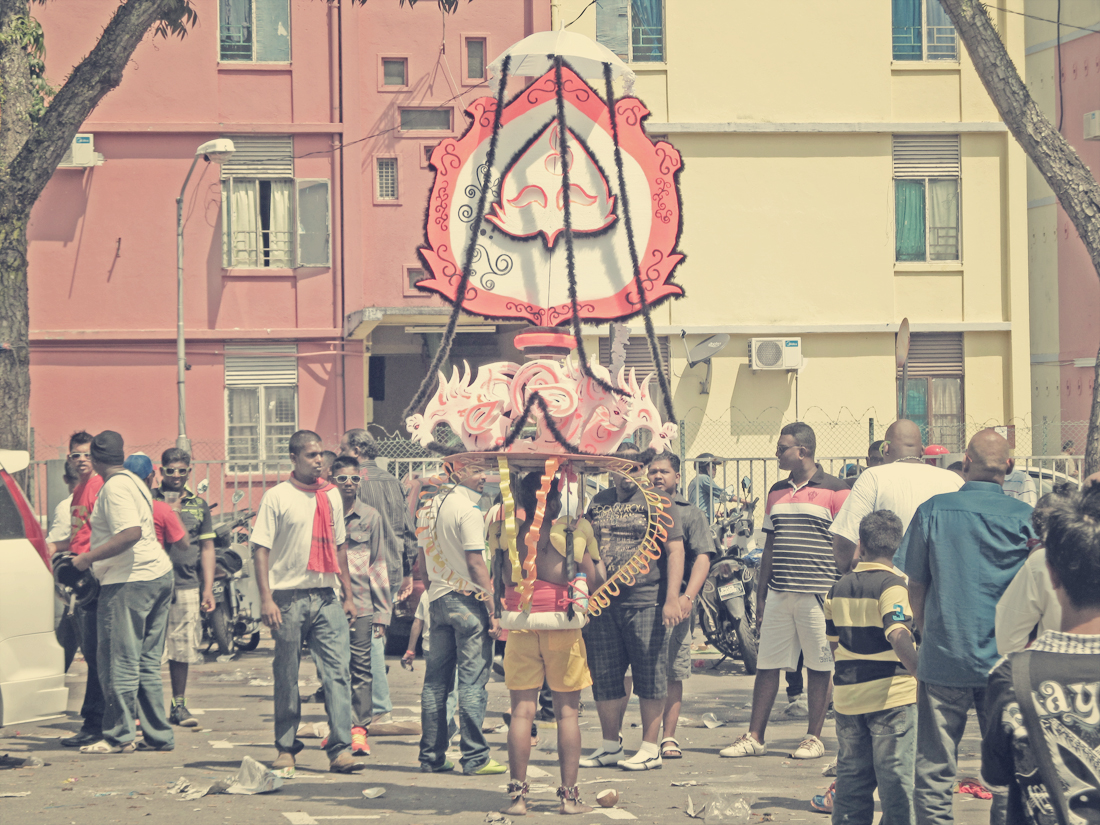
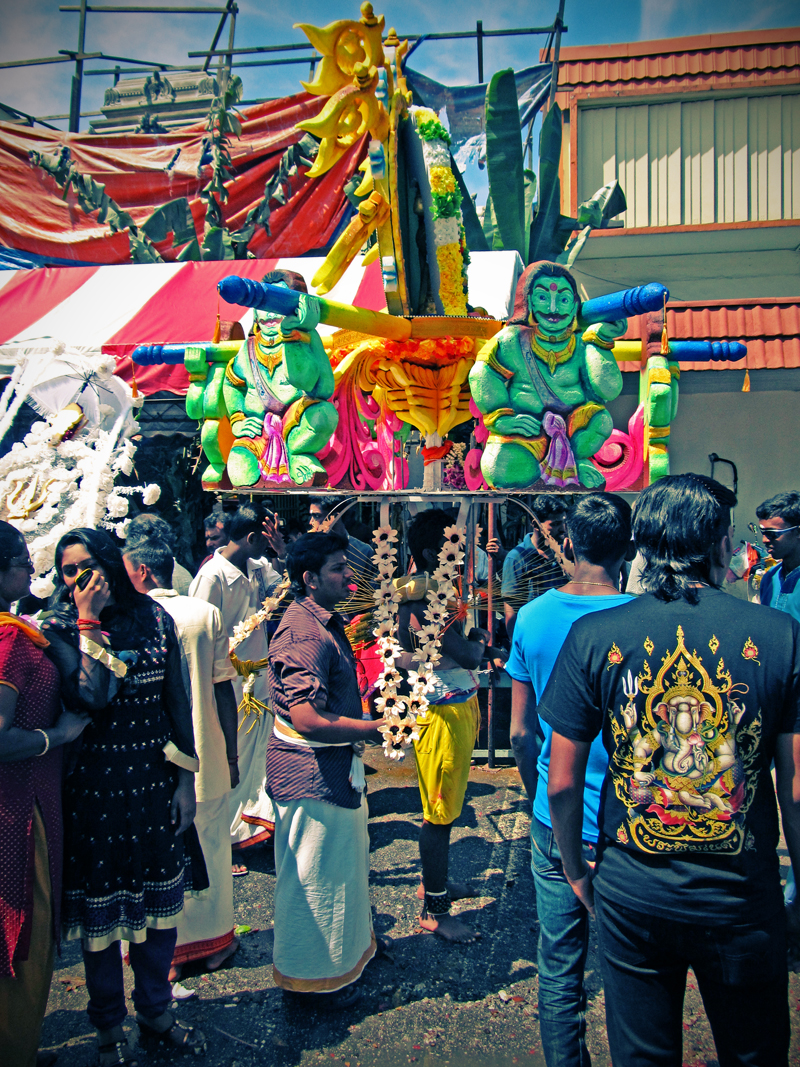

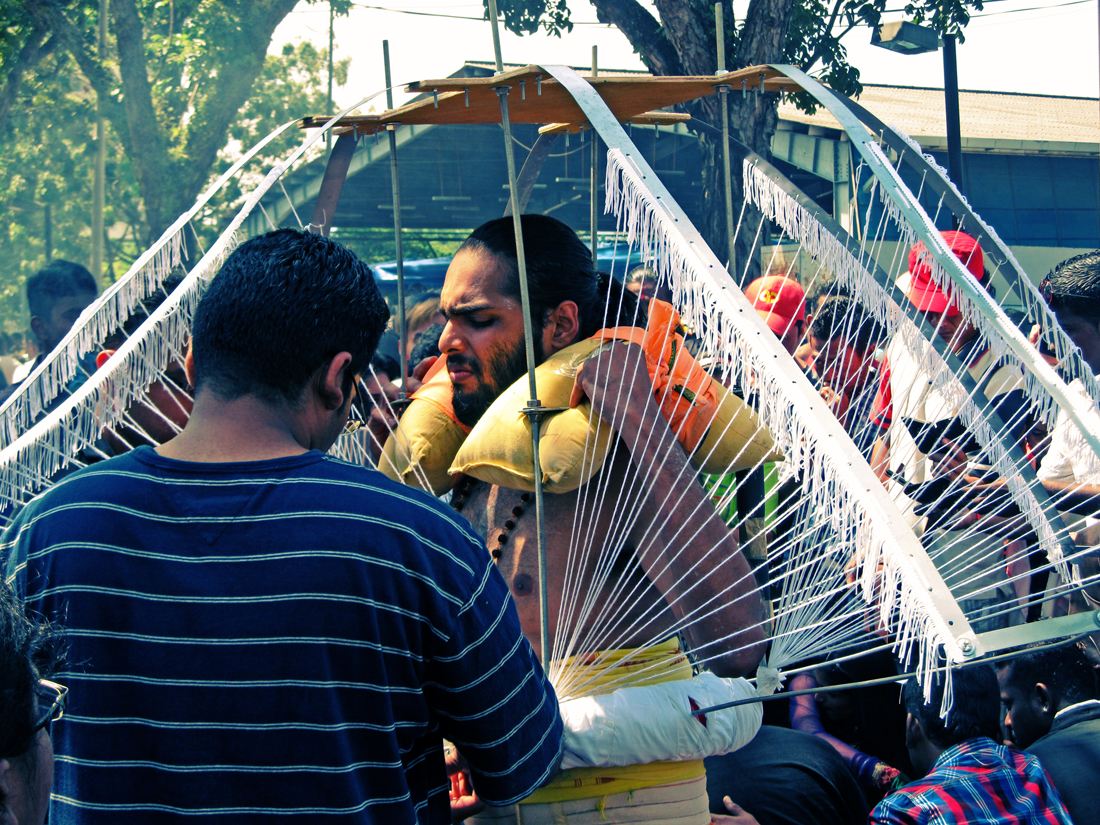


“The simplest kavadi is a semicircular decorated canopy supported by a wooden rod that is carried on the shoulders, to the temple. In addition, some have a small spear through their tongue, or a spear through the cheeks. The spear pierced through his tongue or cheeks reminds him constantly of Lord Murugan. It also prevents him from speaking and gives great power of endurance. Other types of kavadi involve hooks stuck into the back and either pulled by another walking behind or being hung from a decorated bullock cart or more recently a tractor, with the point of incisions of the hooks varying the level of pain.”
More scenes can be found HERE.