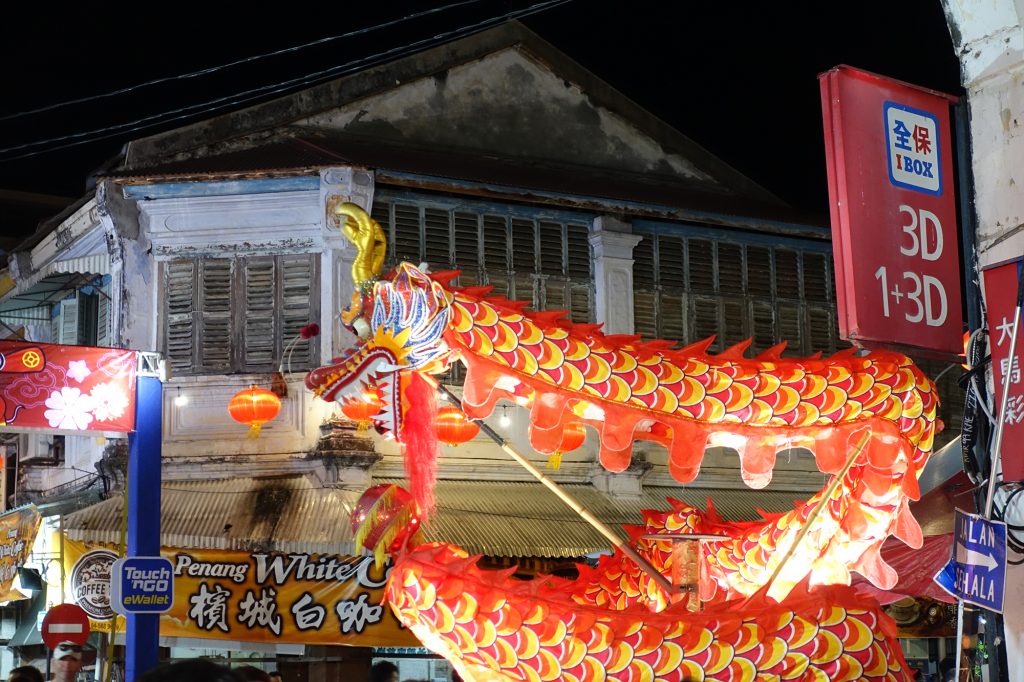
Penang Chinese New Year Festival: The Blue Lion

Lion dance performance during the Chinese New Year celebration at George Town. Lion dance in Penang was found to have started during the 1930s, whereby it was a tradition brought over by immigrants from southern China back then. Hence, the common lion dance here is the southern lion dance style. Usually performed during Chinese New Year or any major Chinese event, the lion dance is believed to bring luck and fortune.

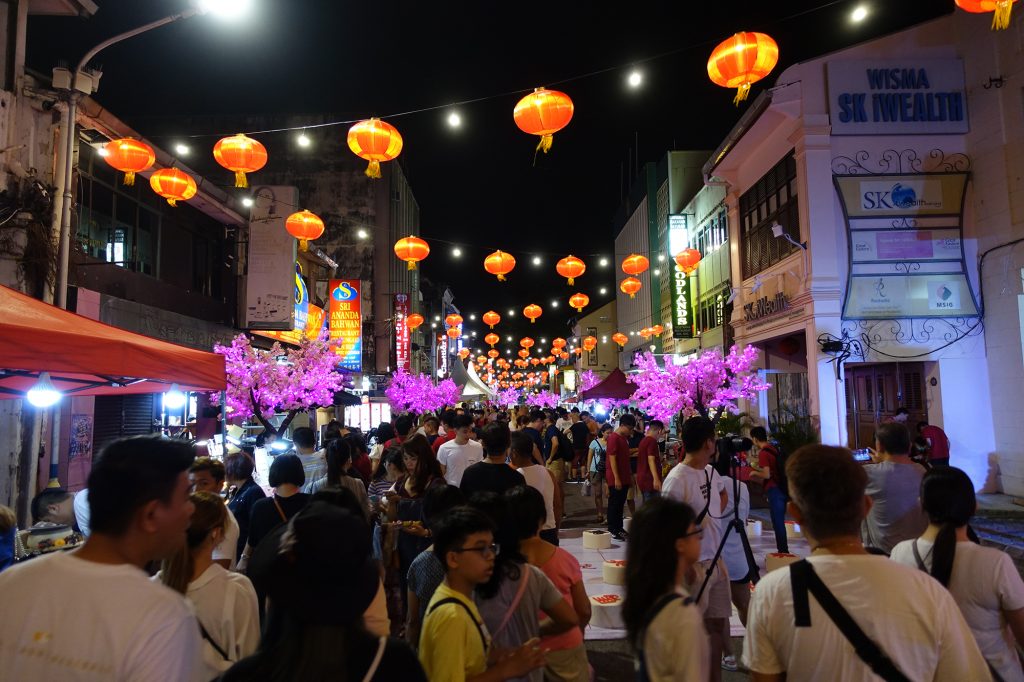
George Town Street View: Campbell Street Market at Night

The old and historical market decorated with lanterns during Chinese New Year nights.

One of the two oldest markets in George Town, Campbell Street Market was built in the early 1900s, and it featured unique colonial architecture design.

Penang Street Art (The Dragon and the Phoenix)

A dragon and a phoenix wall art mural painted by a local artist named Zen Lim (Instagram @zenlim_penang_artist). The mural started off with just the dragon and at a later time, a phoenix was also added into the picture. This mural can be found at the side wall of a heritage shophouse located along Carnarvon Street, George Town.

Chulia Street: Nagore Dargha Sheriff

Nagore Durgha Sheriff (or Nagore Dargha Sheriff) is a small mosque located at the intersection of King Street and Chulia Street. It was built in honor of a Muslim saint in the 1800s and is the oldest Indian Muslim shrine in Penang.

Chulia Street: Han Jiang Ancestral Temple


The Han Jiang Teochew Temple (or Hanjiang Ancestral Temple) is a Chinese temple located along Chulia Street (Lebuh Chulia) in George Town and right at the cross junction of Jalan Masjid Kapitan Keling. It is the community temple of the Penang Teochew Association. Completed in 1870, it serves as the community temple of the Penang Teochew Association which was formed in 1855 by six Teochew migrants.