
In conjunction with the Thaipusam Festival, today is a public holiday in Penang. Thaipusam is a Hindu festival celebrated mostly by the Tamil community annually.
In conjunction with the Thaipusam Festival, today is a public holiday in Penang. Thaipusam is a Hindu festival celebrated mostly by the Tamil community annually.
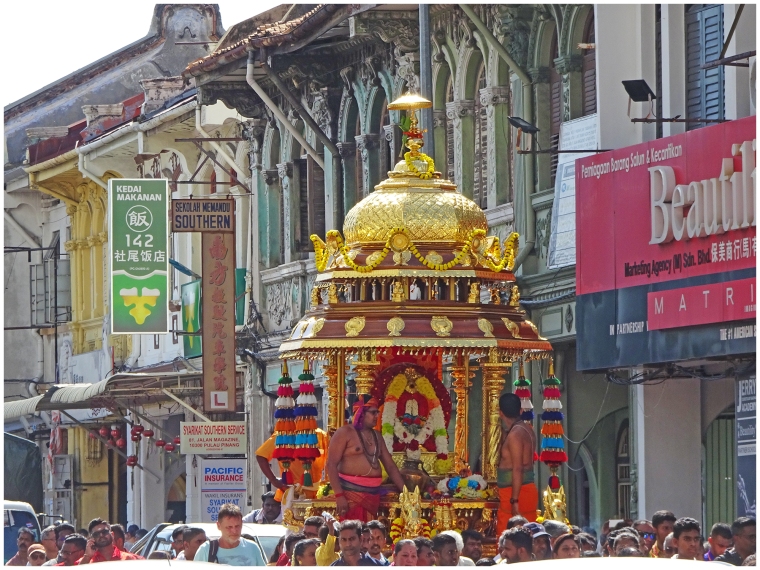
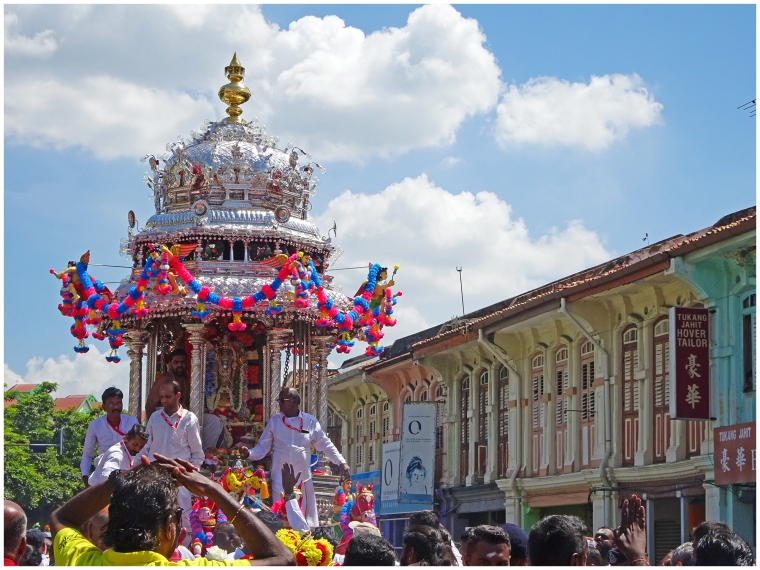
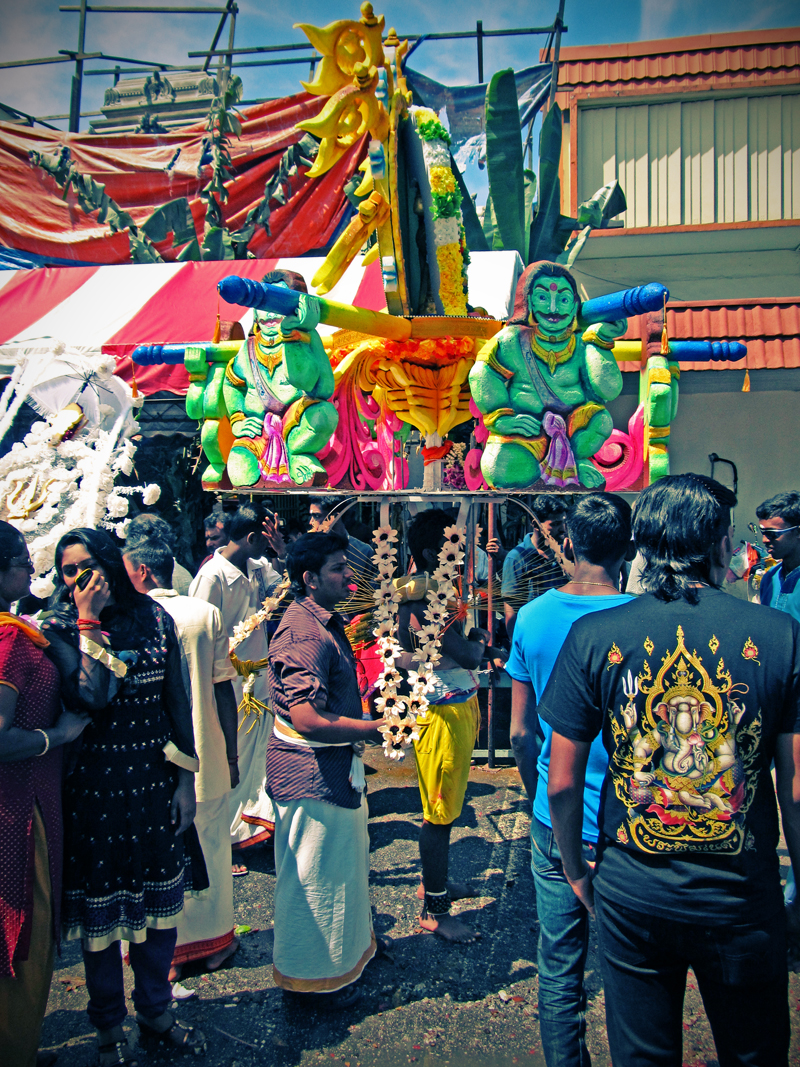
Scenes from the Penang Thaipusam festival. During the festival, the breaking of the coconuts is a ritual practiced by Hindus as an act of cleansing and also to symbolize the renounce of one’s ego at the feet of the presiding deity Lord Muruga (usually carried on a chariot).
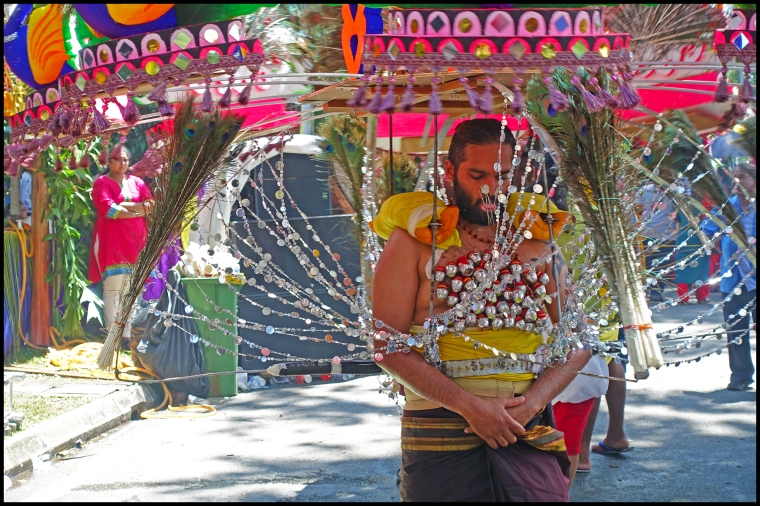
A Kavadi carrier making his pilgrimage to the hilltop temple during the Thaipusam festival in Penang.

A Kavadi carrier walking through the crowded road to the temple during the Thaipusam festival in Penang.
Scenes from the Thaipusam festival celebration in Penang.
A Hindu festival mostly celebrated by the Tamil community every year, the Thaipusam festival for this year falls on the 31st January. The most notable or intriguing scene from this festival is the kavadi-bearers, devotees who usually had their bodies pierced while undergoing a pilgrimage as part of their offerings for their gods during the festival.

This beautiful temple is one of the oldest Hindu temples in Penang, and is also the main hosting temple for the famous Thaipusam festival that is being celebrated annually by Hindu devotees.

In conjunction with the Thaipusam Festival, today is a public holiday in Penang. Thaipusam is a Hindu festival celebrated mostly by the Tamil community annually.

Today marks the day of the Thaipusam festival, celebrated by Hindu devotees in the country.
Thaipusam is a Hindu festival celebrated mostly by the Tamil community annually. Outside India, Malaysia is the only country which widely observes this festival. In Malaysia, it was popularly celebrated by many Hindu devotees either at the Batu Caves in Selangor or the Waterfall Temple in Penang. Carrying the ‘kavadi’ or pulling chariots via ropes pierced on the bodies of devotees are common sights during the festival.


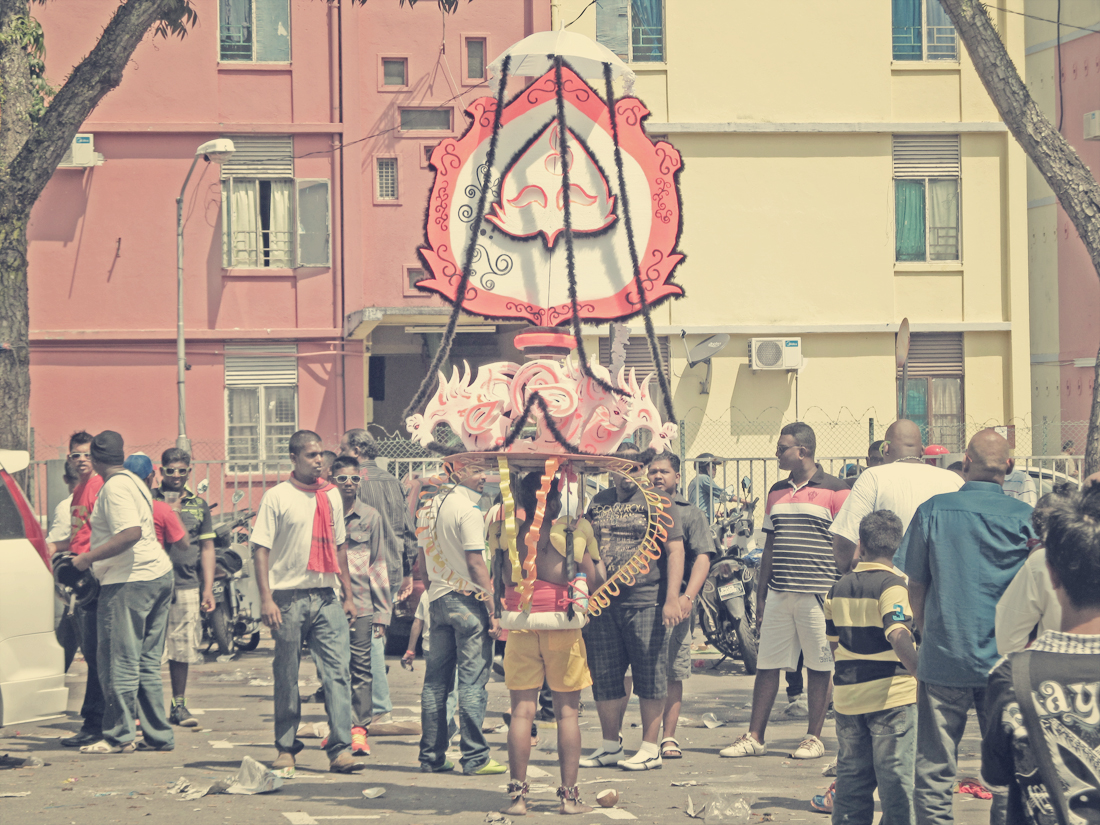

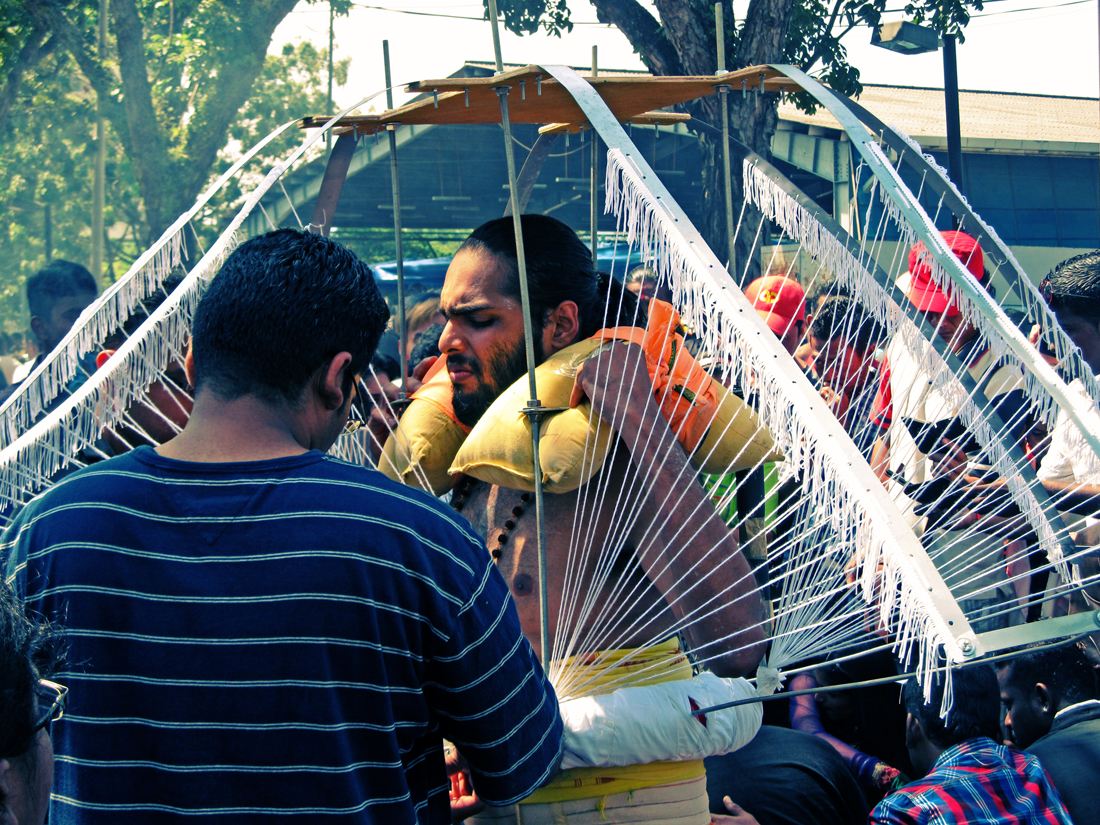


“The simplest kavadi is a semicircular decorated canopy supported by a wooden rod that is carried on the shoulders, to the temple. In addition, some have a small spear through their tongue, or a spear through the cheeks. The spear pierced through his tongue or cheeks reminds him constantly of Lord Murugan. It also prevents him from speaking and gives great power of endurance. Other types of kavadi involve hooks stuck into the back and either pulled by another walking behind or being hung from a decorated bullock cart or more recently a tractor, with the point of incisions of the hooks varying the level of pain.”
More scenes can be found HERE.