Several back alleys in George Town recently went through a ‘beautification process’ as new colorful tiled walkways are being built for people to take a stroll along these rustic alleys.

Several back alleys in George Town recently went through a ‘beautification process’ as new colorful tiled walkways are being built for people to take a stroll along these rustic alleys.

This mural is dedicated to Hameediyah Restaurant, the oldest nasi kandar seller in the country which has its historical roots all the back to 1907.
The mural can be found at the alley just behind the Hameediyah Restaurant at Campbell Street (Lebuh Campbell).


This fresh milk seller who called himself Disco has been operating his ‘Disco Corner Cafe’ or ‘Disco Fresh Milk’ stall by the side of Ayer Itam’s main road for many years. The stall is a favorite among the locals here and only starts operating during late evenings to late nights.


The Sisters’ Curry Mee in Ayer Itam is one of the oldest and most famous food stalls in Penang. Renowned for their heritage food taste, the curry mee is a must try for visitors in Ayer Itam. This local art mural is being created in honor of the sisters and can be found behind one of the alley ways of Ayer Itam town.
Since their retirement a couple years ago, the curry mee stall is now managed by their grandniece and it operates from morning to noon daily.


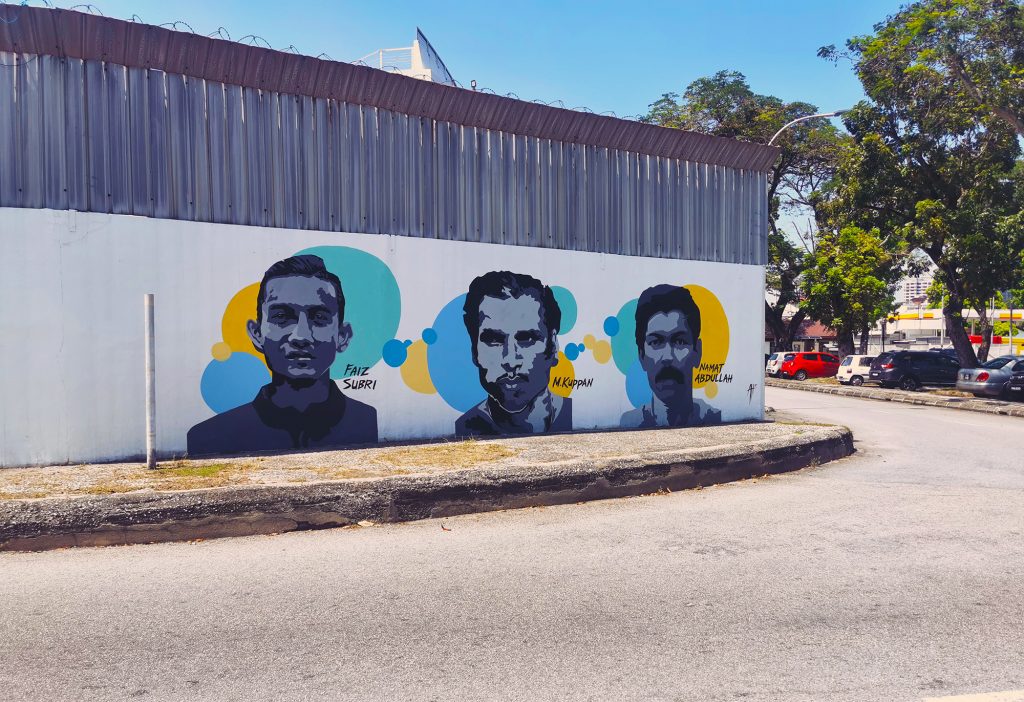
The new art murals located at the town of Ayer Itam, Penang. These murals depicts various local scenes of Ayer Itam, from the famous “Curry Mee Sisters” in the daytime to the popular nighttime “Disco Fresh Milk” seller in Ayer Itam.

Spotted this at one of the townhouses in George Town.

A traditional lion dance performance being held at an ancient stage at the old Khoo Kongsi compound in 2019.


The annual Chinese New Year (CNY) Decorations in Queensbay Mall. This year, the mall sees a far lesser crowd due to the COVID-19 pandemic and the Movement Control Order.

Today marks the 9th day of the Chinese Lunar New Year, which is also a big celebration of the Chinese Hokkien to express their gratitude to the Jade Emperor. It is also known as the Hokkien people’s new year, and in Penang where the majority of Chinese are Hokkiens, it is usually celebrated more widely (and ‘loudly’) than the first day of Chinese Lunar New Year.
It was said that during the Song Dynasty, Chinese Hokkien refugees were saved from being caught and killed by the Mongols on the same day of the Jade Emperor’s birthday after hiding in a sugarcane farm for nine consecutive days.
Hence, as a gratitude and believing that the Jade Emperor had blessed and saved them, the Hokkiens celebrated this occasion by offering prayers (usually including sugarcane too) to the Jade Emperor.

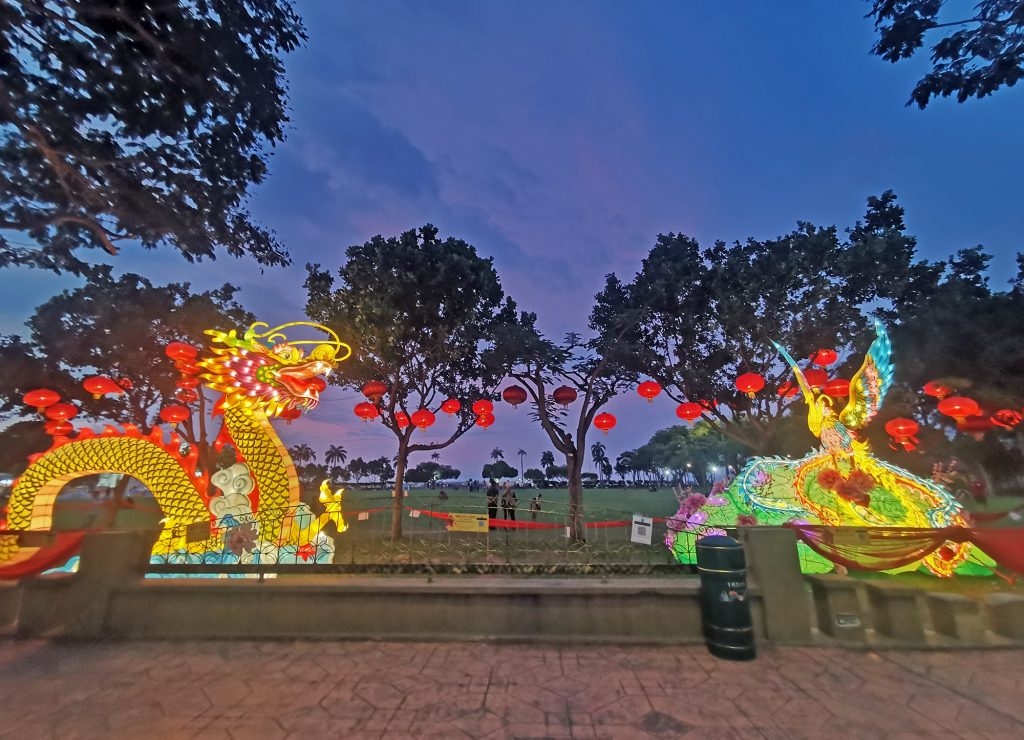
A photo taken during the George Town Chinese New Year festival back in February 2020. This year, due to the COVID-19 pandemic and the Movement Control Order, no large celebrations, travel or mass gatherings will be allowed for Chinese New Year.