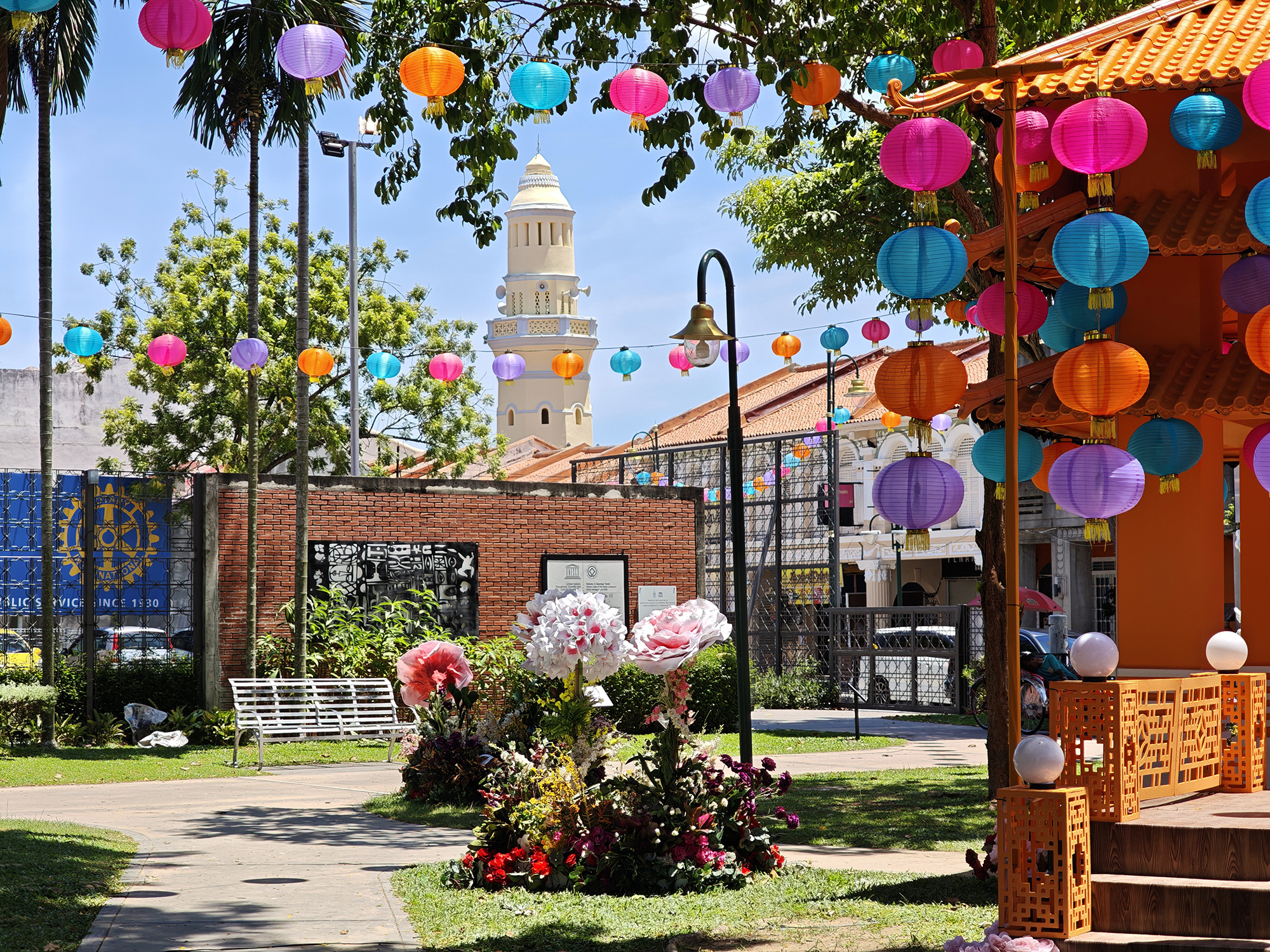
Wisma Kastam (formerly the Malayan Railway Building)

Wisma Kastam (formerly the Malayan Railway Building), was completed in 1909 in George Town, Penang, and designed in Edwardian Baroque style by the British architect Arthur Benison Hubback. Though it was built as a railway terminus, it never housed any actual train tracks—passengers would come to the station, then take a ferry across to Butterworth instead.

Over time, it served many functions: offices, a clock tower, customs building, waiting hall, and more. Because of its utilitarian role without actual rail lines, locals refer to it as a “ghost station.” It has now been granted Grade I heritage status and is under new leaseholders, with efforts to preserve its architecture and legacy.

The building is located along China Street Ghaut, and is also known as the “Big Ben” of Penang.

Penang Isle : Fort Cornwallis Moat at Night

The newly restored western and southern moat at Fort Cornwallis at night. Together, both moats will form a water basin covering about 4,000 m², about 0.9 m deep, and holding roughly 3,600 cubic metres of water.  The restoration uses traditional construction methods, with features like mechanical sand filters and bio-retention swales built into the design for ecological health and long-term stability.  The project is part of Penang’s North Seafront Improvement Programme, with funding from the state government and partners like Think City and Yayasan Hasanah.

Sights in Penang : A Heritage Street View

A trishaw in Penang, locally called “beca,” is a traditional three-wheeled bicycle taxi mainly used by tourists to explore George Town and Penang’s heritage sites. The trishaw ride is a popular and relaxing way to see local street art, temples, mosques, and historic buildings around the UNESCO World Heritage Site area. Typically, rides cost around RM 40 to RM 50 per hour, with drivers often serving both as guides sharing local history and navigating the narrow and busy streets safely.

Trishaws hold historical importance since the 1930s and remain a cultural symbol despite the decline in daily local use, mostly catering now to visitors who want an authentic and leisurely tour experience around Penang’s charming spots.

Penang Isle : Fort Cornwallis Moat

The Fort Cornwallis moat in Penang has undergone a major restoration set to be fully completed and opened to the public by July 2025, featuring the reinstatement of its southern and western sections to form a 4,000 square meter water basin about 0.9 meters deep, holding approximately 3,600 cubic meters of water. Using traditional building methods for long-term stability, the restoration includes ecological enhancements like a mechanical sand filter and a vegetated bio-retention swale, aligning with sustainable development goals. The project, costing around RM23.4 million and supported by the Penang state government, Think City, and Hasanah Foundation, also includes landscaping improvements, new visitor amenities, and a rebuilt food court adjacent to the moat, designed to complement the historic site.

This restoration revives the fort’s original defensive features from its 1804 construction, enhancing heritage conservation and turning the moat area into an attractive green public space and educational site for both locals and tourists, particularly timed to coincide with the George Town UNESCO World Heritage celebrations.

Originally constructed by the British East India Company in 1804 as a defensive measure during the Napoleonic Wars, the moat was filled in 1921 due to public health concerns (malaria) and construction developments.
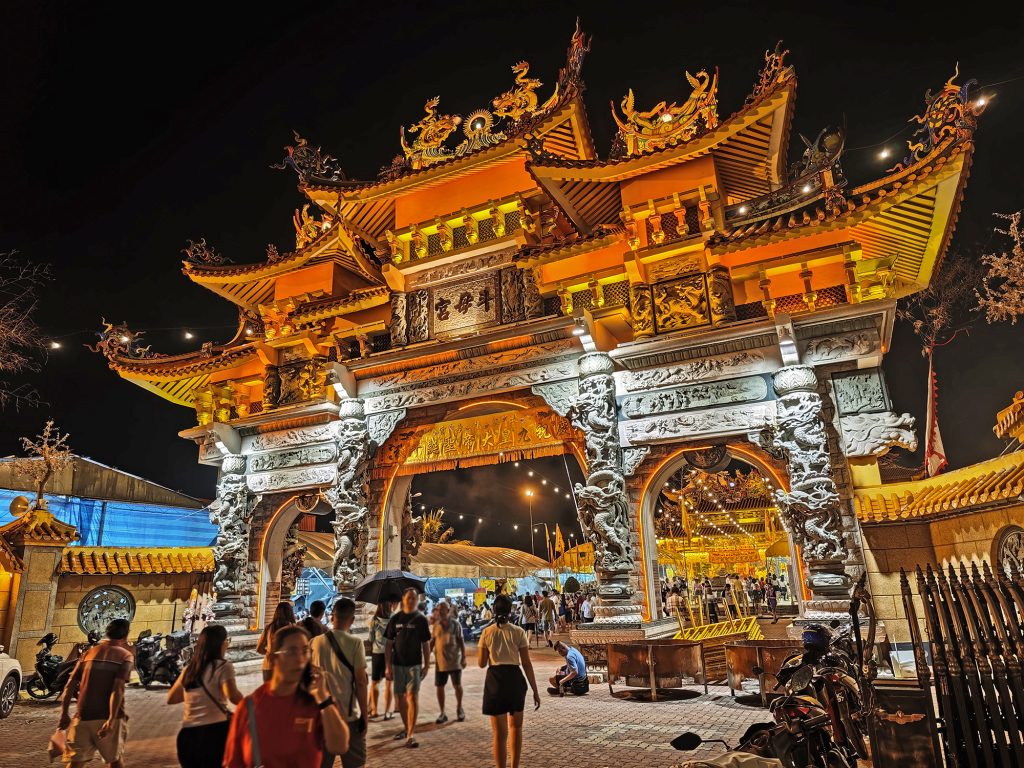
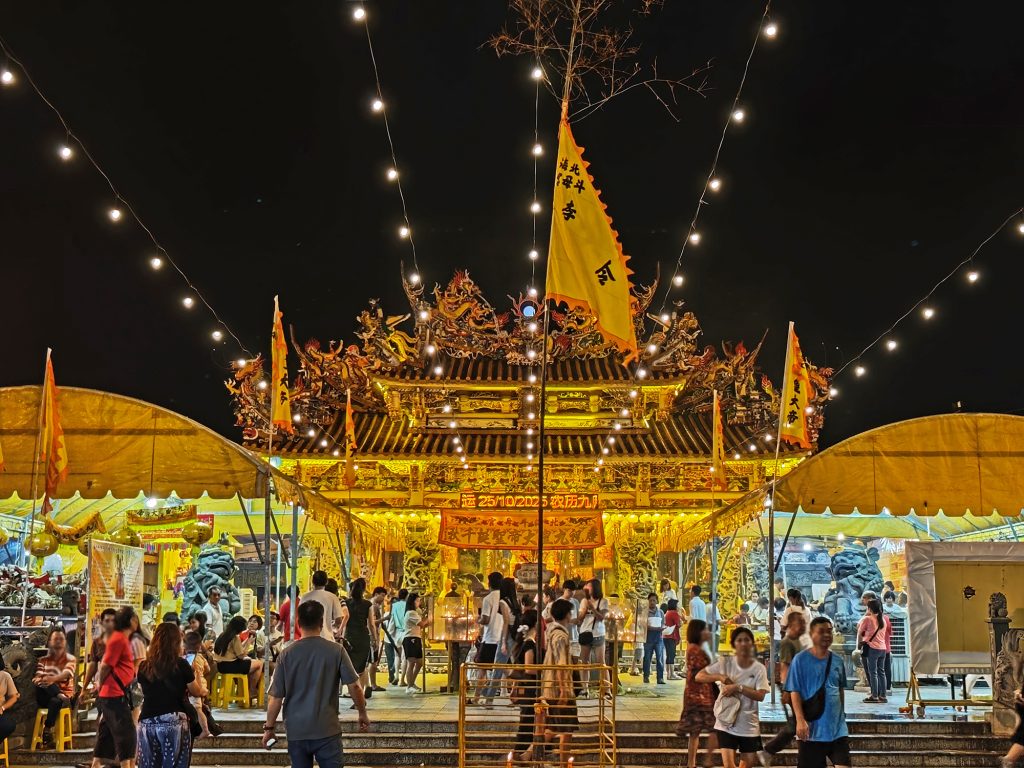
Khoo Kongsi at Night

Khoo Kongsi, officially known as Leong San Tong Khoo Kongsi, is the grandest Hokkien clanhouse in Malaysia and one of George Town’s most iconic heritage sites. Located at Cannon Square amidst a network of old shophouses, it was rebuilt in 1906 after a fire destroyed the original structure—featuring a magnificent ancestral hall, operatic stage, administrative blocks, and rows of terrace houses forming a tightly-knit clan complex . The main hall, Leong San Tong (Dragon Mountain Hall), showcases exquisite Southern Fujian craftsmanship—with detailed stone carvings, ornate wooden beams, gilded decorations, and a rich visual tapestry of murals and ancestral tablets. The site also houses a small museum tracing the Khoo family’s migration from Fujian, clan governance, and community influence in Penang’s development.

Walking Through Heritage XV (Five Foot Way)

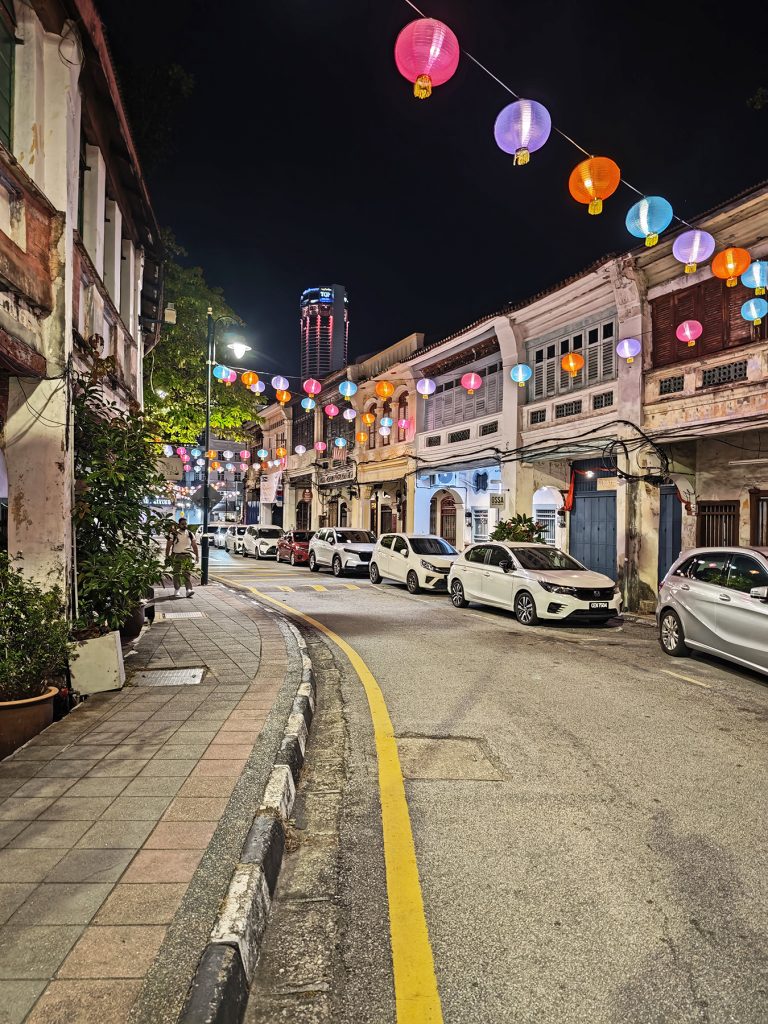
The five-foot way is a covered walkway found in front of many shophouses in Malaysia, especially in places like George Town, Penang. True to its name, it’s typically about five feet wide and provides shelter from sun and rain, allowing people to walk comfortably along rows of shops. It’s a unique blend of architecture and function—often lively with activity, from street vendors to chatting locals—and reflects the colonial and multicultural heritage of Malaysian towns.

Sights in Penang : Trishaws at Stewart Lane

The Penang trishaw, which looks like a small buggy attached to a bicycle, first appeared around 1935–1936 with about 50 units managed by the city. It used to be a common way for locals to get around, but today it’s mostly a fun ride for tourists—complete with bright neon lights, music, and guided trips through George Town’s narrow streets and famous murals.

Penang Reclining Buddha Thai Temple (Wat Chayamangkalaram)

Wat Chayamangkalaram Thai Buddhist Temple in Penang, located along Burma Road in George Town, is famed for housing one of the world’s largest reclining Buddha statues, measuring an impressive 33 meters in length. Founded in 1845 on land granted by Queen Victoria to the Thai community, the temple is a vibrant symbol of Thai Theravāda Buddhism in Malaysia. With its ornate golden pagodas, intricately decorated prayer halls, and serene garden, it draws visitors for both worship and sightseeing. The reclining Buddha’s posture represents the historical Buddha at the moment of his final passing into Nirvana, symbolizing peace and detachment from worldly suffering.

Interesting Fact: Hidden within the base of the giant reclining Buddha are niches that serve as columbariums—small compartments that hold the ashes of devotees. So while the statue symbolizes peace and Nirvana, it quite literally rests above the remains of those seeking eternal serenity, blending spiritual symbolism with a practical function.