


IMMERSIOx is an interactive event held from August 2 – 10, 2025 at the UAB Building in George Town (11 AM–7:30 PM, free admission) and is part of the 2025 George Town Festival. This bold digital art exhibition brings the immersive future to Penang—featuring interactive installations, projection mapping, and new-media artworks that invite visitors to explore, touch, and engage with space and perception in fresh ways. Curated by Filamen, the showcase is part of GTF 2025 and serves as a dynamic platform for emerging local and international digital artists. It’s a tactile, full-body experience designed to blur the lines between art and reality.


“After Dusk”, the opening event of the George Town Festival 2025, transformed Padang Kota Lama (Penang Esplanade) into a vibrant nightscape on August 2–3 (update: extended till 10th August now) from 5pm-11pm with projection-mapping on Town Hall by Filamen (titled “TERANG”), cultural performances like “Starry Night” and “Transmute: Dengung Dalam Sepi”, a musical fusion set “Rhythms & Roots”, and a bustling night bazaar called “A Market Under a Starry Night” featuring local crafts and food. All events were free and celebrated this year’s theme, Rojak, symbolizing Malaysia’s colorful blend of cultures.


Painted by local artist Vincent Phang, The mural captures Mr. Rangan, the legendary coconut seller who has been a fixture in Lorong Abu Siti (Aboo Sittee Lane), George Town for over 52 years. In his signature towel wrapped around his head, he’s shown expertly slicing open coconuts amidst the alley’s historic shophouse backdrop. The artwork celebrates not just his craftsmanship, but also the spirit of Penang’s street culture—and the quiet heroes who keep it alive day after day. It’s both a vivid portrait and a tribute to tradition and perseverance.
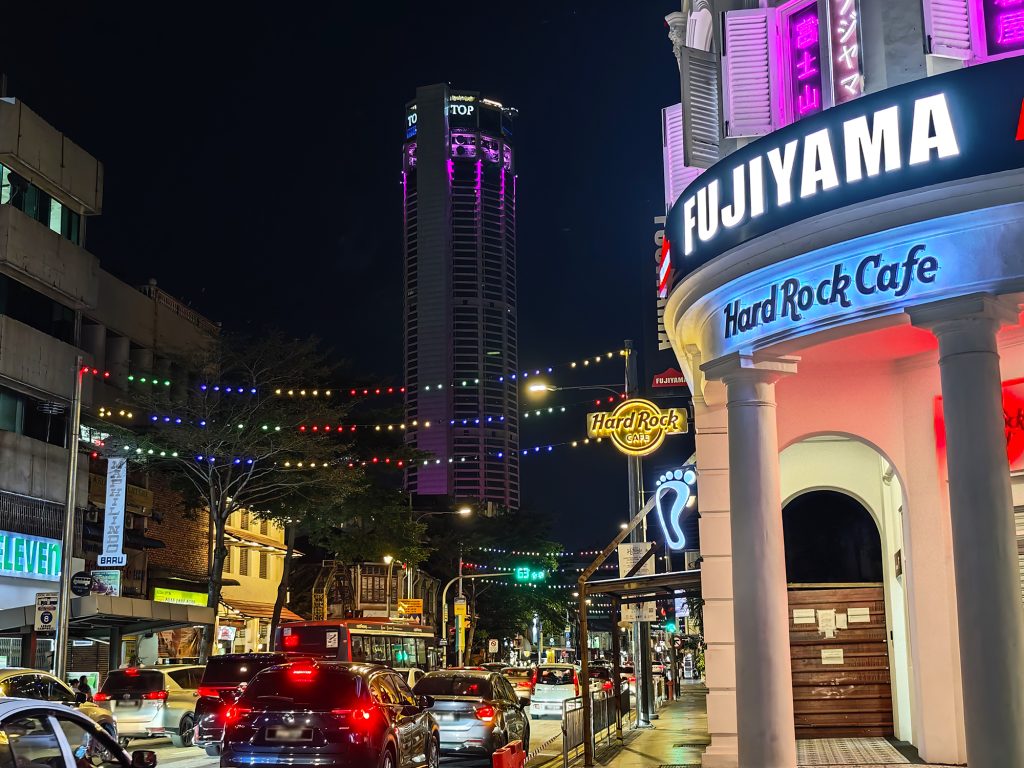
Penang Road (Jalan Penang) is one of George Town’s oldest and liveliest streets, connecting colonial-era landmarks with modern spots like Komtar and Chowrasta Market. Known for its mix of heritage, street food, and nightlife—especially around Upper Penang Road—it remains a key hub for both locals and tourists.

Khoo Kongsi, officially known as Leong San Tong Khoo Kongsi, is the grandest Hokkien clanhouse in Malaysia and one of George Town’s most iconic heritage sites. Located at Cannon Square amidst a network of old shophouses, it was rebuilt in 1906 after a fire destroyed the original structure—featuring a magnificent ancestral hall, operatic stage, administrative blocks, and rows of terrace houses forming a tightly-knit clan complex . The main hall, Leong San Tong (Dragon Mountain Hall), showcases exquisite Southern Fujian craftsmanship—with detailed stone carvings, ornate wooden beams, gilded decorations, and a rich visual tapestry of murals and ancestral tablets. The site also houses a small museum tracing the Khoo family’s migration from Fujian, clan governance, and community influence in Penang’s development.


The 17th annual George Town Heritage Celebrations—themed “Doors and Doorways”—ran from 5–7 July 2025, inviting visitors to step into Penang’s hidden past. The event featured immersive storytelling, artisan workshops (from pottery to traditional snacks), heritage-themed performances, and behind-the-scenes access to eight historic Category 1 heritage buildings. Designed to celebrate George Town’s living traditions, the celebration focuses on cultural connections, community engagement, and heritage education. The event is located at the areas around Armenian Street this year.


An art mural painted by local artist Vincent Phang depicting the famous Lum Lai Duck Meat Koay Teow Th’ng stall at Cecil Street Market. This mural can be found at the corner shophouse of McNair Street and Cecil Street Market junction.
Located at Cecil Street Market in George Town, Penang, this family-run stall has served its signature duck meat kōay teow th’ng since the late 1970s. It earned a Bib Gourmand in the Michelin Guide Kuala Lumpur & Penang 2025, praised for its savory clear broth packed with umami, silky duck, pork, fish cakes, fish balls, duck blood jelly, and aromatic fried garlic and shallot bits—served over smooth flat rice noodles.


