
Category: Places to Visit / Attractions
Penang Isle: The Goddess of Mercy’s Garden
Standing high atop the hills above the Kek Lok Si temple complex is the 30.2m bronze statue of the Goddess of Mercy or Kuan Yin. The statue and its surrounding garden was completed and opened to the public in 2002. A 20-storey high pavilion is also built to shelter the goddess’ statue and is a marvelous sight to behold.

And the night view of the statue;


Penang Isle: Kapitan Keling Mosque
Located at the Heritage zone of George Town, the Kapitan Keling Mosque is one of the oldest and famous landmarks in the island.
The mosque was built by the the head of the Indian Muslim community in Penang during the year 1800, and is located at along Jalan Masjid Kapitan Keling (formerly Pitt Street but was later renamed after the mosque). The historic mosque was also used previously as the state mosque of Penang. The name “kapitan keling” is used to denote the headman or leader of the South Indian Muslim community.
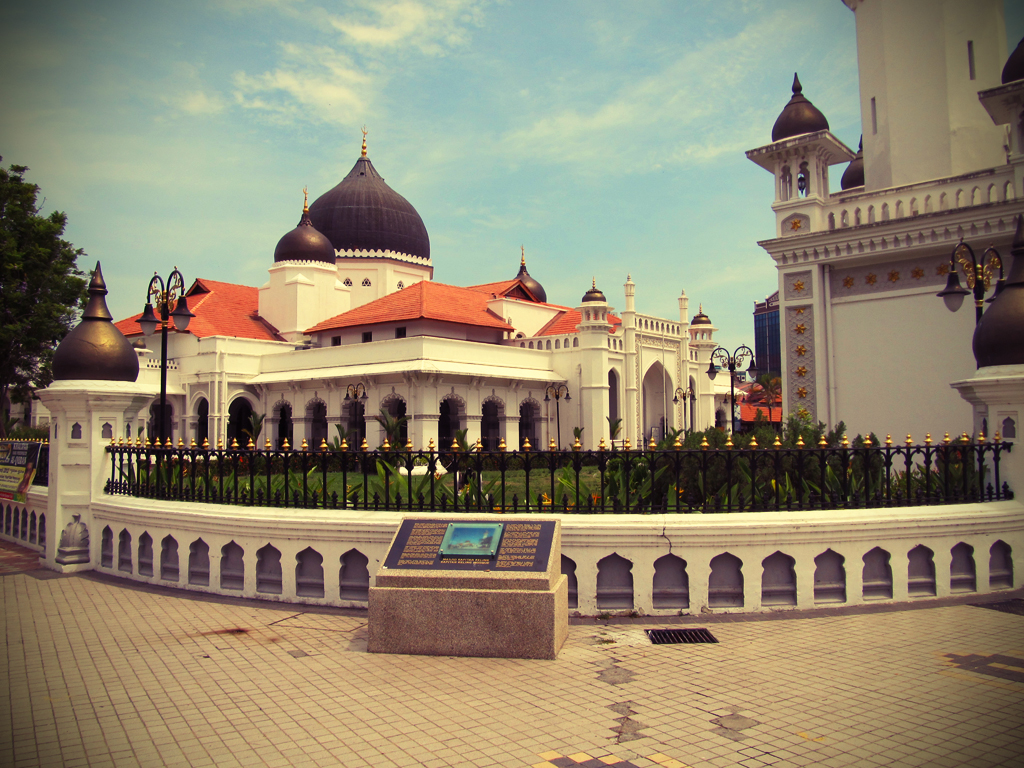


Further info on the mosque here: http://www.visitpenang.gov.my/portal3/what-to-see/attractions/kapitan-keling-mosque.html
Penang Isle: Kek Lok Si Temple (Part II)
A pictorial stroll at the magnificent Kek Lok Si Temple. For more info, please refer to my first post on Kek Lok Si, LINK HERE.


George Town Street View: ARMENIAN STREET (Lebuh Armenian)
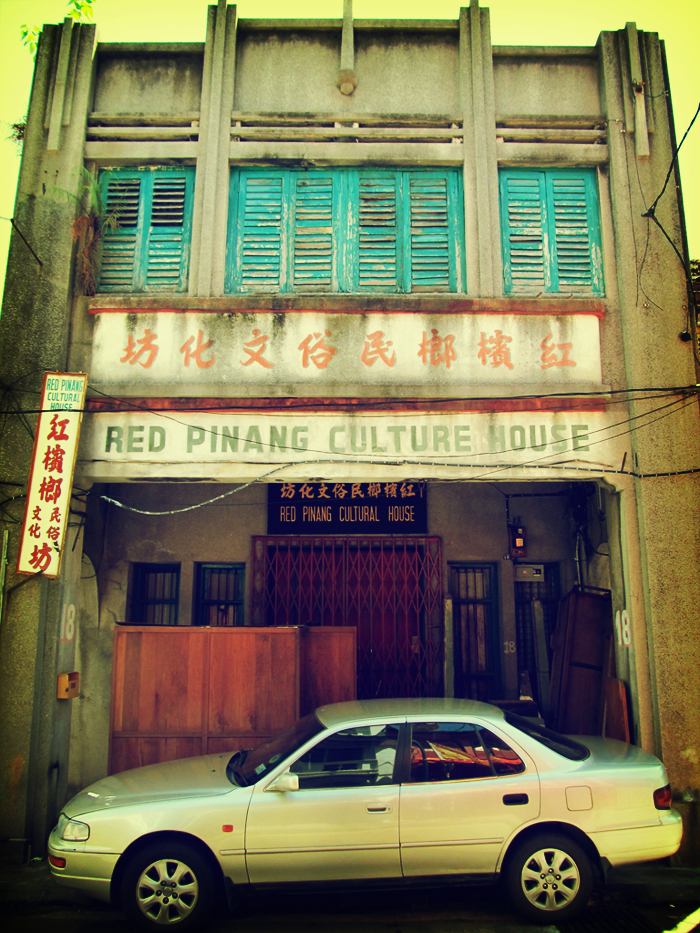
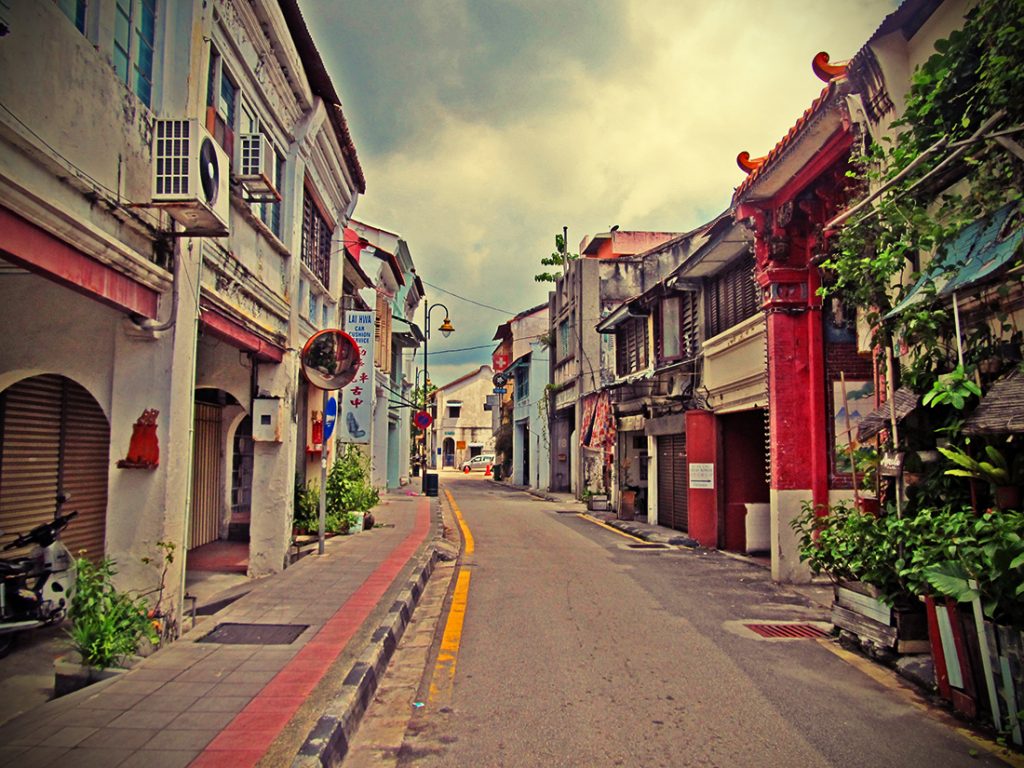
The popular historical Armenian Street is located at the heart of heritage zone in George Town, Penang.
The street’s name originates from a the Armenian community residing in the area including an Armenian family who had their home at the junction of the now Armenian Street and Beach Street in the early part of the 19th century. The famous Armenians amongst these were the Sarkies Brothers who later founded the Eastern & Oriental Hotel in the 1880s. After the Armenians left Penang, the street was populated by the Chinese community and they in turn, established some of the more famous clan houses in the area.
Armenian Street is currently home to Penang’s most famous art mural drawn by Ernest Zacharevic and various local shops and cafes catering to the tourists who visit the street.






The most famous mural of Penang
Penang Isle: Komtar Tower
As the sixth tallest building in Malaysia, the Komtar Tower located at the heart of George Town, is the most recognizable landmark of Penang. The building of the tower and its complex started in 1974 which was officiated by the late Tun Abdul Razak, the second Prime Minister of Malaysia. The word KOMTAR is also a portmanteau of Kompleks Tun Abdul Razak. Completed in 1988, the 65-storey tower is a 232 m (761 ft) 12-sided geometric block atop a 4-storey podium. The complex comprises office and retail commercial space as well as public and recreational facilities.


Penang Isle: Han Jiang Teochew Temple
The Han Jiang Teochew Temple is a Chinese temple located along Lebuh Chulia in George Town and right at the cross junction of Jalan Masjid Kapitan Keling. It is the community temple of the Penang Teochew Association. Completed in 1870, the Hanjiang Ancestral Temple is the community temple of the Penang Teochew Association which was formed in 1855 by six Teochew migrants.
The temple has suffered from long years of wear and tear as well as neglect over the year until a special committee was then formed in 2002 to conduct a restoration project of the temple which was later completed in 2005. The temple is carefully restored in its unique old Chinese architecture and to reflect its history properly.


Penang Isle: National Park
The Penang National Park located at Teluk Bahang (or sometimes referred locally as ‘End of the World’) is the first protected area legally gazetted under the National Park Act of 1980, which signifies the State and Federal Governments’ efforts in protecting the environment. Also the smallest national park in the country, the park is unique due to its landscapes, wildlife and beaches. Teluk Bahang is a few kilometers further up from Batu Feringghi and the location of the National Forest is here.
Some of the the unique features of the park include meromictic lake, wetlands, mangroves, mudflats, coral reefs and turtle nesting beaches. The eight beaches located at the park are among the nicest beaches in the island due to their almost untouched nature. These beaches are Teluk Bahang, Teluk Tukun, Tanjung Aling, Teluk Duyung (Monkey Beach), Teluk Ketapang, Pantai Kerachut, Teluk Kampi and Pantai Mas. To get to the beaches, one can hike and walk up the jungle trails or alternatively hire a boat to reach there via the sea.
There is also a lighthouse in the park which is located at Muka Head and is accessible through the far end of Teluk Duyung. Built in 1883 at a cost of £37,929 by the British, it is located 242 metres (794 ft) above sea level.


Visitors will need to register (for free) before and after entering the park at the reception area as shown above. An information counter as well as public shower rooms are available there too.


The beach is also home to monitor lizards which like to take a stroll on the sands and swimming at the sea on sunny days.

The trees of the forst is also home to Dusky Leaf monkeys resting or swinging at the branches on sunny days.


Just in front of the National Park Office, is the nearby fishermen jetty where fishing boats dock and also where one can find boat-for-hire to travel by sea to the beaches located at the National Park area.


Penang Isle: Wat Buppharam Temple
The Buppharam Buddhist Temple (Wat Buppharam), located at Pulau Tikus in Penang, was built in the year 1942 by Luang Por Sri Keow, a Buddhist monk. The name Wat Buppharam is also known as Flower Temple. Various legendary and mythical figures of Buddhism and Taoisim origins can be found around the temple complex. The temple is well known for its ‘Lifting Buddha’, a 100-years old Buddha statue where worshippers seek answers or prayers from. Besides that, the temple also offers services such as providing protective amulets.
The temple recently has an official website at http://www.watbuppharam.com/.


Penang Isle: The Dhammikarama Burmese Temple
The Dhammikarama Burmese Temple is a buddhist temple located at the heart of George Town with its presence that lasted on the Penang island for more than 200 years since its foundation back in 1803. Often regarded as the earliest Burmese Buddhist temple in Malaysia, the temple is located directly opposite of the Wat Chaiyamangalaram Thai Buddhist temple.
The temple complex is consisted of a main shrine hall, the Sime Hall which houses a giant standing Buddha statue, a pagoda, a 200 years old well built during the early settlement of monks. The roof of the Sime Hall is also clad in golden paint with unique Burmese architecture. Statues of mythical creatures as well as deities can also be found scattered around the temple complex’s courtyard and garden.
Location: Google Map


