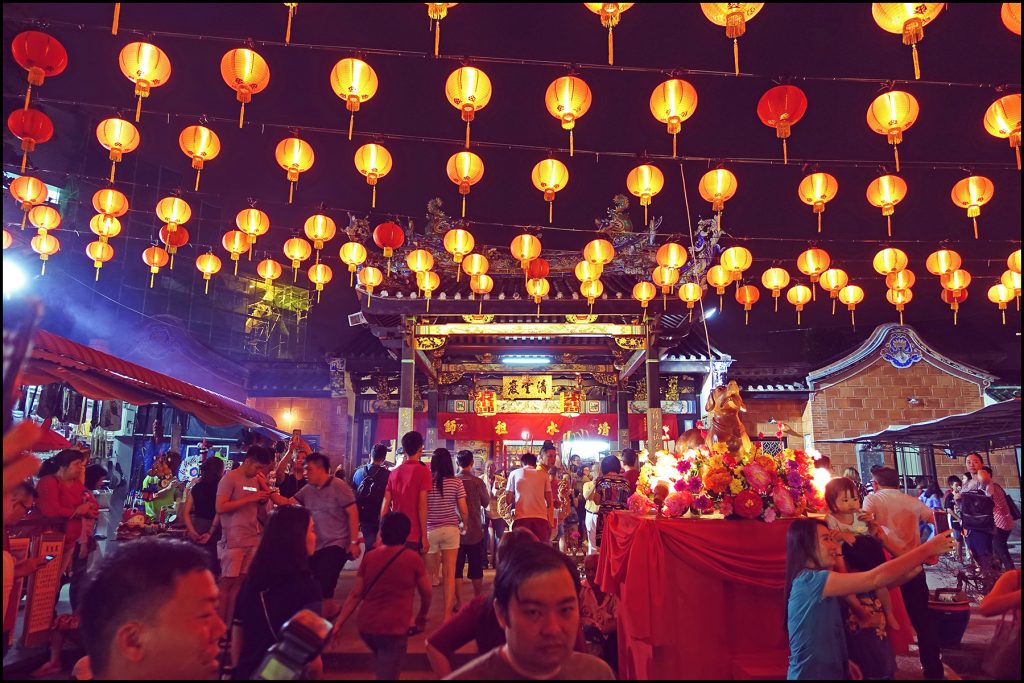
Street photo of a small alley in the heart of George Town.
Street photo of a small alley in the heart of George Town.


This large art mural is created by UK artist Thomas Powell, as part of his Chinese Zodiac art series in Penang. Named “Dripping Dragon” by the artist, the art work depicts a dragon on horseback, who is wearing an ancient Chinese warrior costume. This art work can be found at Hutton Lane, George Town.


One of the most common mythical creatures in Chinese lore is the Qilin. Qilin looks like a cross-breed of a dragon and a giraffe although historically, Qilin was said to have originated from the giraffe. According to Chinese beliefs, Qilin is a divine creature that protects against evil and therefore, usually appears as sculptures or paintings in temples as well as in ancient Chinese architecture.

Painted portraits of the Chinese deities known as the Door Guardians (Menshen). The Door Guardians are believed by the Chinese in ancient times to guard against evil spirits from entering ae house or its premise.

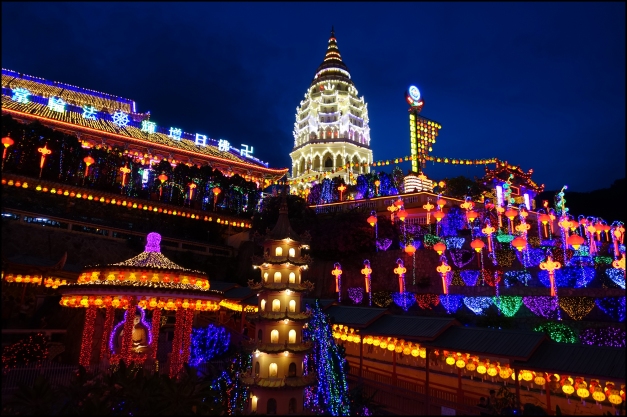
The beautifully decorated and illuminated Kek Lok Si temple during a Chinese New Year night in Penang.

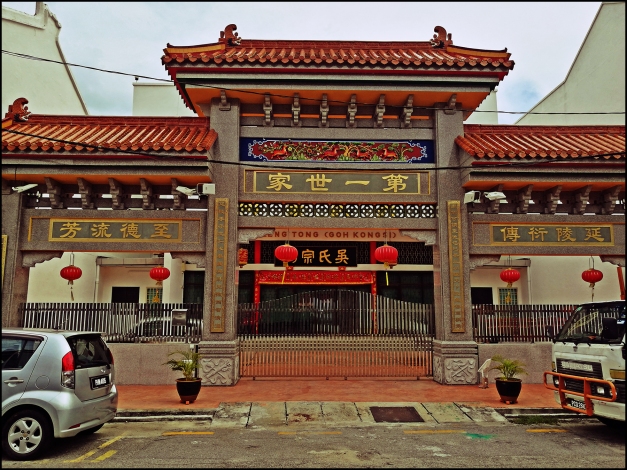
Originated as a small shrine along Noordin Street in George Town, the Tow Moo Keong temple is built as a place of worship for Tow Moo, a Chinese deity known usually as the goddess of the heavens. The temple features detailed sculptures of dragons and heavenly entities of the Chinese lore.
This year marks the 6th Ban Ka Lan Chinese New Year celebration at the Penang Snake Temple.
The Ban Ka Lan (or Flame Watching) festival is held annually during the Chinese New Year period, as a ceremony to predict the year’s economy by observing the intensity of the flames during the ritual. The festival is also held to celebrate the birthday of the deity of the snake temple, Cheng Chooi Chor Soo Kong.