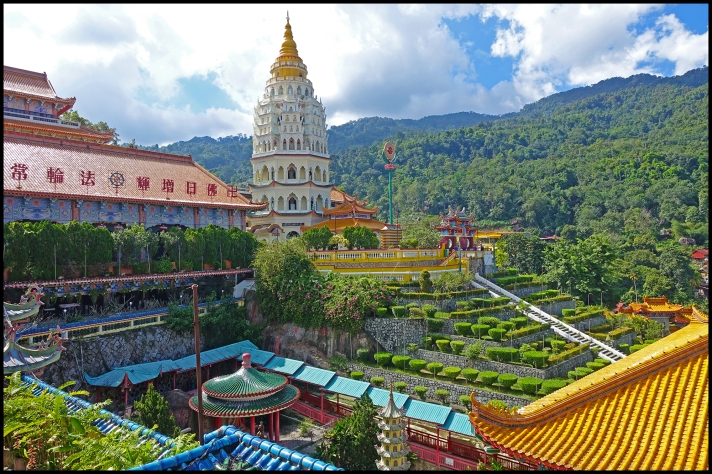
One of the few iconic places in Penang is the hilltop temple known as Kek Lok Si, which means “Heavenly Temple” or “Temple of Supreme Bliss”.
One of the few iconic places in Penang is the hilltop temple known as Kek Lok Si, which means “Heavenly Temple” or “Temple of Supreme Bliss”.


A Chinese temple lighted up at night, which can be seen at the Noordin Street Ghaut area in George Town.
Located on the outskirt area of Bukit Mertajam, which is called Machang Bubok, Hai Dong Ma Temple is a Taoist temple dedicated for the worship of Chinese deity Thean Hou (also popularly known as Mazu). The temple compound also houses various Chinese mythical beings statues including a set of Chinese animal zodiacs.
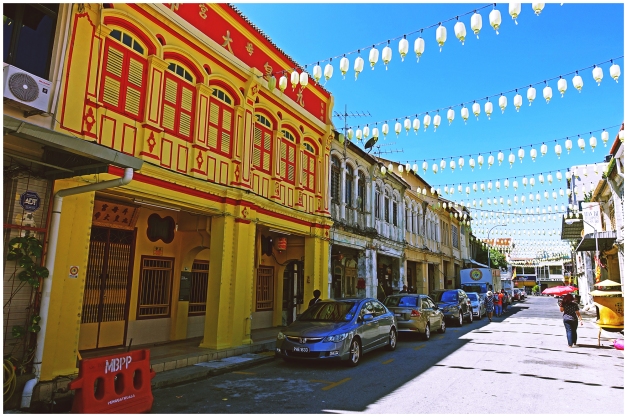


This old The Nine Emperor Gods Temple (a townhouse painted in yellow) is located at Cheong Fatt Tze Street, George Town.
Primarily observed by the local Chinese, the Nine Emperor Gods Festival is a 9-days Taoist celebration beginning on the eve of 9th lunar month of the Chinese calendar. This year’s celebration will be ending on the 17th October. During a 9-days period, devotees will be observing a strict vegetarian diet.
“The festival is dedicated to the nine sons of Dou Mu, the Goddess of the North Star, who is believed to control the Books of Life and Death. Devotees believe the deities arrive through the waterway and processions are usually held from temples to the river or seashore as a symbolic gesture.”
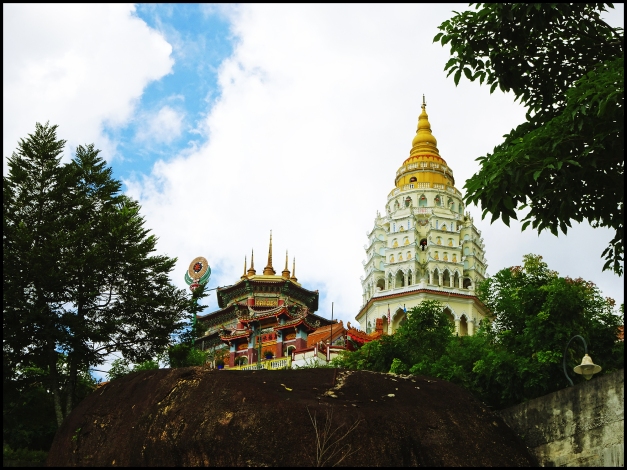
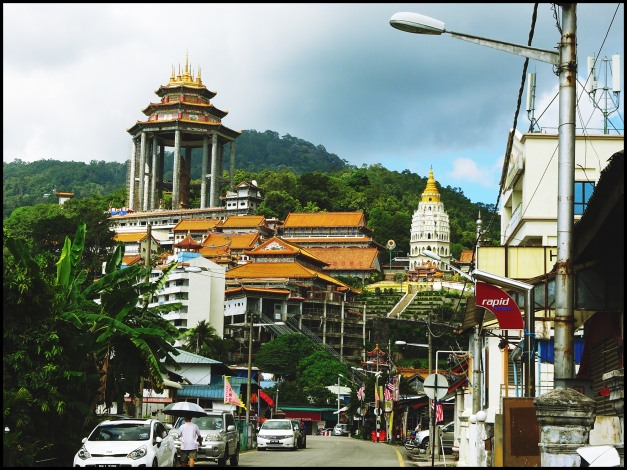
Kek Lok Si Temple at the hills of Ayer Itam.

Old heritage shophouses located along Carnarvon Street, George Town. According to the historical signboard, businessman Khaw Seng Lee and his cousins founded Kim Bian Seng Gold Merchant Company and the Kim Bian Aik Goldsmith at these buildings in the early 20th century. Khaw Seng Lee was the former Chairman Penang Philomatic Union and held key positions in various institutions in Penang back then including Chung Ling School and Lam Wah Ee Hospital.

A large mural depicting the portrait of a Chinese opera (or Peking opera) performer, which can be found within the interior of Art Lane at Beach Street, George Town.

The Ng Kongsi is a Cantonese clan association that is located at King Street, George Town. Its building has a unique Chinese architecture that features a jagged or zig-zag shaped roofline. The shape is designed such to display an element of fire, according to local belief.


A popular place for beef soup noodles and/or rice. This stall is located at Loo coffeeshop at Carnarvon Street, George Town.