Built in 1928, these beautiful old colonial era houses at Bangkok Lane, Penang once served as the home to the family of Cheah Leong Keah, a successful businessman at that time.


Built in 1928, these beautiful old colonial era houses at Bangkok Lane, Penang once served as the home to the family of Cheah Leong Keah, a successful businessman at that time.
Easily viewable from the ferry going towards the island’s terminal, the Wisma Yeap Chor Ee (or Yeap Chor Ee Building) was built in 1922. It was then used to house mercantile offices related to the Penang port during its heydays.


A shot of the various roof shapes of the old pre-war houses in George Town.
Located at the Heritage zone of George Town, the Kapitan Keling Mosque is one of the oldest and famous landmarks in the island.
The mosque was built by the the head of the Indian Muslim community in Penang during the year 1800, and is located at along Jalan Masjid Kapitan Keling (formerly Pitt Street but was later renamed after the mosque). The historic mosque was also used previously as the state mosque of Penang. The name “kapitan keling” is used to denote the headman or leader of the South Indian Muslim community.
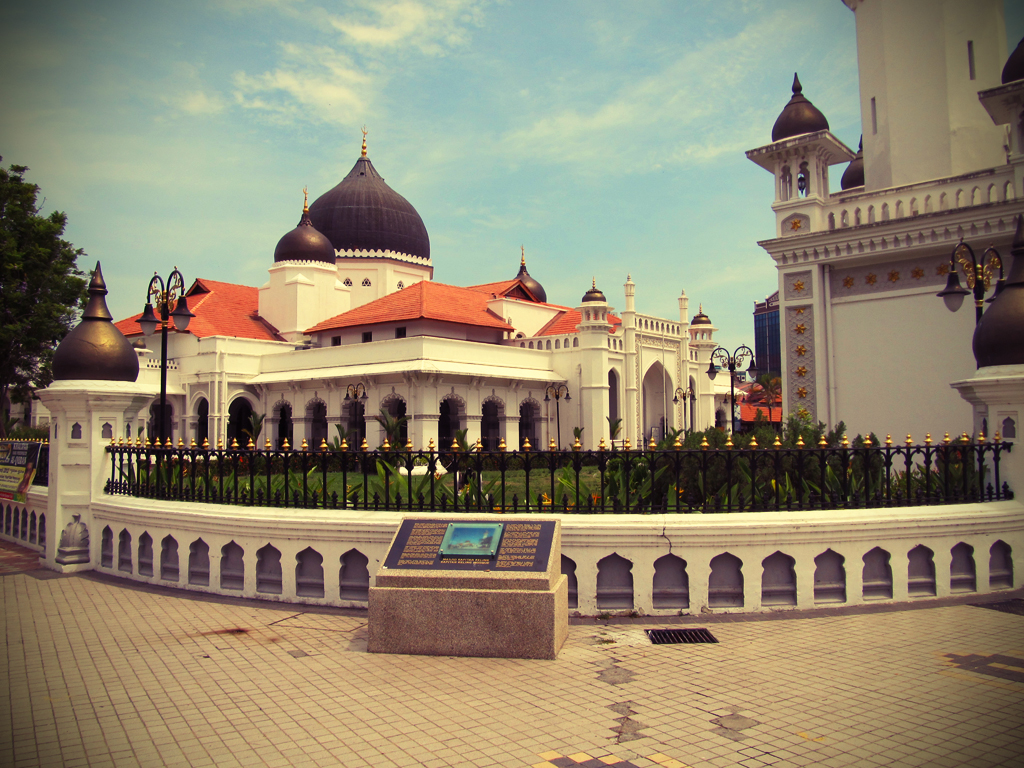


Further info on the mosque here: http://www.visitpenang.gov.my/portal3/what-to-see/attractions/kapitan-keling-mosque.html

The Yeoh Kongsi clan association originates from the period of 1836 to 1840, is a clan association of Hokkien emigrants in Penang bearing the Yeoh surname who came from mainland China. Yeoh Kongsi is one of the five major Hokkien clan associations in Penang and the association’s building is located at the intersection of Chulia Street Ghaut and Victoria Street, George Town.


The Penang Supreme Court complex at Farquhar Street, Georgetown was built in 1903 during the British colonial years and has been hearing cases ever since. The court complex incorporated neo-Palladin style architecture and is currently houses the Penang High Court. The design of the complex was done by the Public Works Department, which was headed by John Henry McCallum, the Surveyor-General of the Straits Settlements at that time. The Penang Supreme complex was also expanded with a 3-storey wing. The Logan Memorial is located right in front of the court’s main entrance.


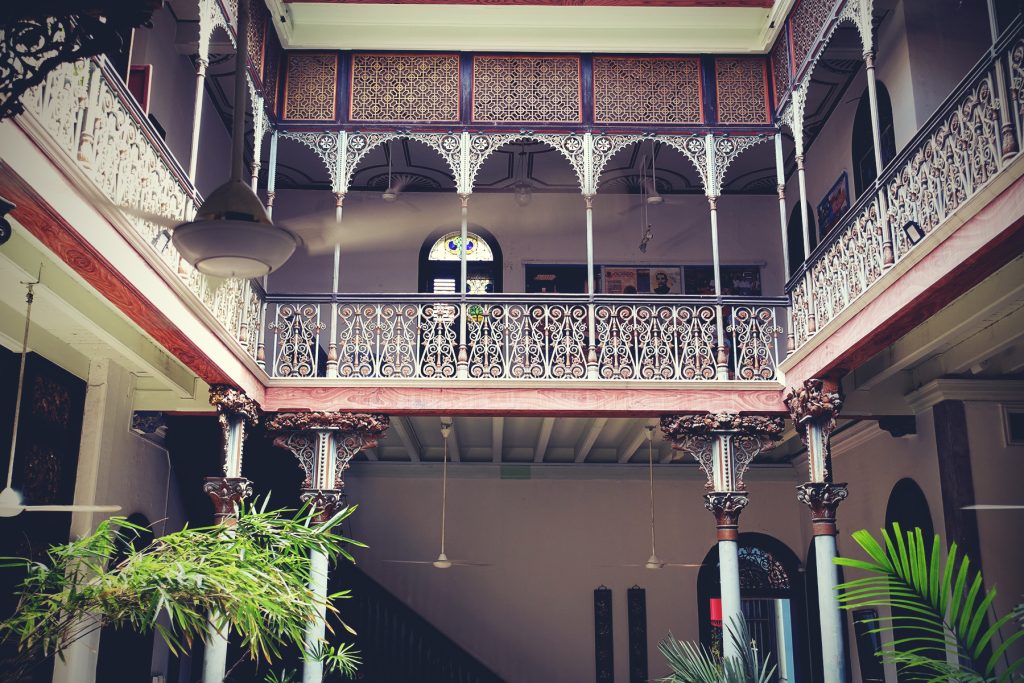
Located at Church Street, the Pinang Peranakan Mansion (formerly known as Hai Kee Chan mansion) was originally the home of Kapitan Chung Keng Kwee, a very prominent figure in Penang. It is an unique heritage mansion built at the end of the 19th century with architectural influence from the Peranakans culture, also known as the Babas and Nyonyas. Though not a Baba himself, Kapitan Chung Keng Kwee incorporated the culture during the building of his mansion due its association with wealth and substance.
The Peranakans are a Chinese community adopting selected ways of the local Malays and later, the colonial British, hence, created a unique lifestyle and customs which had not only left behind a rich legacy of antiques but its cultural influences in Penang. The mansion cum museum is also the house to over 1,000 pieces of antiques and relics of the era as well as a testimony of that time’s eclectic design and architecture.
For more information, one can visit the official site of the mansion at http://www.pinangperanakanmansion.com.my/
Visiting Hours
Monday to Sunday including Public Holidays from 9:30 am to 5 pm
Admission Fee: MYR 10.00




The Penang World Heritage Office located at the heart of George Town (Acheh Street) is set up to manage, keeping tab and protecting the heritage values of the site. In addition, the office also conduct research, training and education programs with regards to heritage related activities as well as to promote the site.
Penang’s George Town was listed as World Heritage Site by the United Nations Education, Scientific and Cultural Organization (UNESCO) on 7 July 2008 at the World Heritage Committee meeting in Quebec City, Canada.
For more info, visit the official website.
