
Standard Chartered Bank at Beach Street, George Town.
Tag: historical
Penang Isle: Chinese Chamber of Commerce

The Penang Chinese Chamber of Commerce building is located at Light Street, opposite the Esplanade. It is both a heritage and historical building in George Town.


Penang Isle: Yap Temple & Kongsi
The Yap Temple and the Yap Kongsi complex is located right beside the Choo Chay Keong Temple. The temple section houses the ancestral tablets of the Yap families. This Yap clanhouse complex in Armenian Street was built in 1924 with the incorporation of Straits Eclectic architectural design style.


Originally, it was found that there were two Yap clan associations in Penang which later merged together to form the Lum Yeong Tong Yap Kongsi. The ten thousands plus square feet of land on which Yap Kongsi was built was donated by a local tycoon named Yeap Chor Ee, who was also a member of the Yap clan.

Penang State Assembly Building
The Penang State Assembly Building is Penang’s historical state administrative building which is located along Light Street.
Built in the early 19th century, the state assembly building incorporates classical Greek and Palladian architecture, almost resembling the structure of a Greek temple.


The Logan Memorial

Penang Isle: Malayan Railway Building


Many Penang people today may not know that this building was once the Malayan Railway Building (yes, there used to be a railway station on the island). The building currently known as Wisma Kastam houses the state Customs Department. It was formerly the Malayan Railway Building located alongside trading offices and warehouses built in the 20th century.
Back then, the Malayan Railway Building was believed to be the only railway station in the world without a rail. Hence, instead of having platforms or trains, the station had administrative offices, a ticketing booth and a first-class Railways Restaurant with Bar and Grill. Passengers would be buying their tickets (which would include the ferry fees) at the station and then boarded the Railway Ferry Steamers to the mainland to catch the train.
Penang Portrait V

A familiar view for those crossing over to the island with the ferry.
Penang Isle: Kapitan Keling Mosque
Located at the Heritage zone of George Town, the Kapitan Keling Mosque is one of the oldest and famous landmarks in the island.
The mosque was built by the the head of the Indian Muslim community in Penang during the year 1800, and is located at along Jalan Masjid Kapitan Keling (formerly Pitt Street but was later renamed after the mosque). The historic mosque was also used previously as the state mosque of Penang. The name “kapitan keling” is used to denote the headman or leader of the South Indian Muslim community.
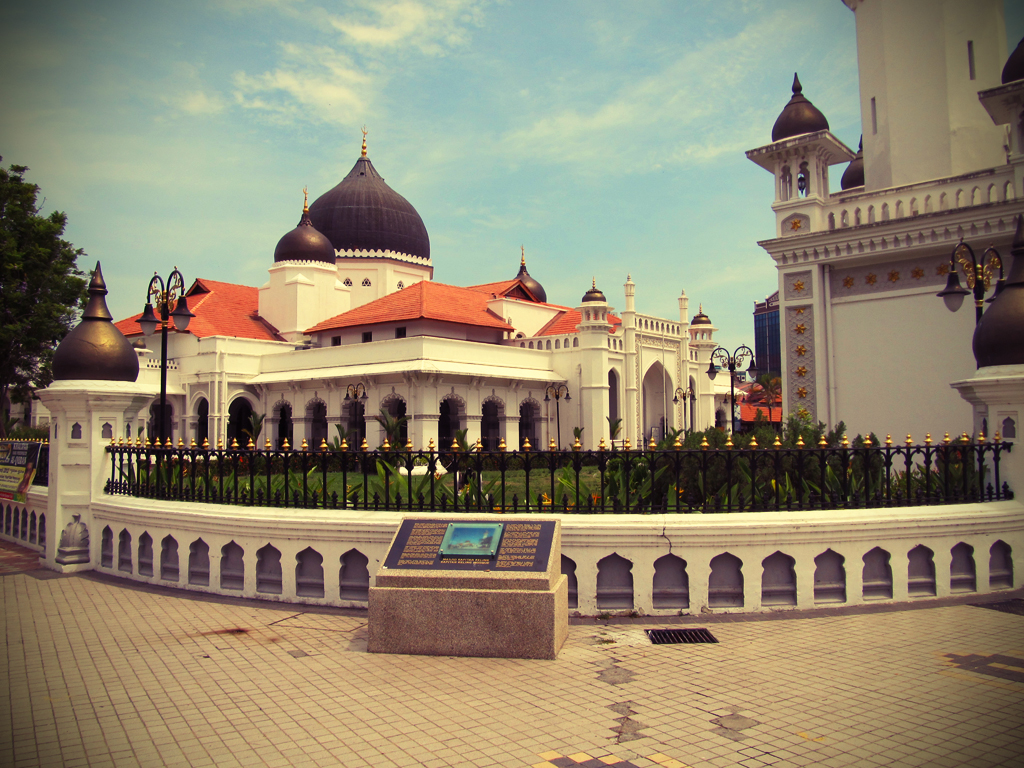


Further info on the mosque here: http://www.visitpenang.gov.my/portal3/what-to-see/attractions/kapitan-keling-mosque.html
Penang Isle: Pinang Peranakan Mansion
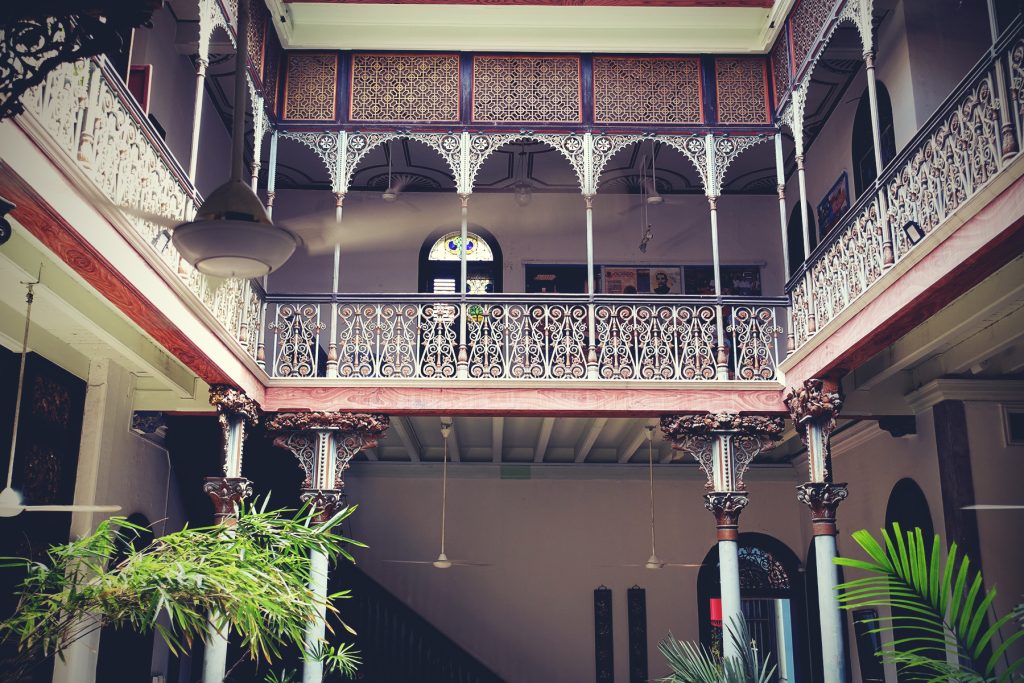
Located at Church Street, the Pinang Peranakan Mansion (formerly known as Hai Kee Chan mansion) was originally the home of Kapitan Chung Keng Kwee, a very prominent figure in Penang. It is an unique heritage mansion built at the end of the 19th century with architectural influence from the Peranakans culture, also known as the Babas and Nyonyas. Though not a Baba himself, Kapitan Chung Keng Kwee incorporated the culture during the building of his mansion due its association with wealth and substance.
The Peranakans are a Chinese community adopting selected ways of the local Malays and later, the colonial British, hence, created a unique lifestyle and customs which had not only left behind a rich legacy of antiques but its cultural influences in Penang. The mansion cum museum is also the house to over 1,000 pieces of antiques and relics of the era as well as a testimony of that time’s eclectic design and architecture.
For more information, one can visit the official site of the mansion at http://www.pinangperanakanmansion.com.my/
Visiting Hours
Monday to Sunday including Public Holidays from 9:30 am to 5 pm
Admission Fee: MYR 10.00




Penang Isle: Ong Kongsi Clan Temple
Located along one of the main roads at the heart of George Town, the Chinese clan temple Thye Guan Tong Ong Kongsi is the clan association of the Min Hokkien bearing the Ong surname. The original ancestral temple of the clan was built in 1891 by the sea in Jelutong. The current clan temple, the Seh Ong Kongsi, is located at 436 Penang Road which is just right opposite of the busy KOMTAR complex and tower.

